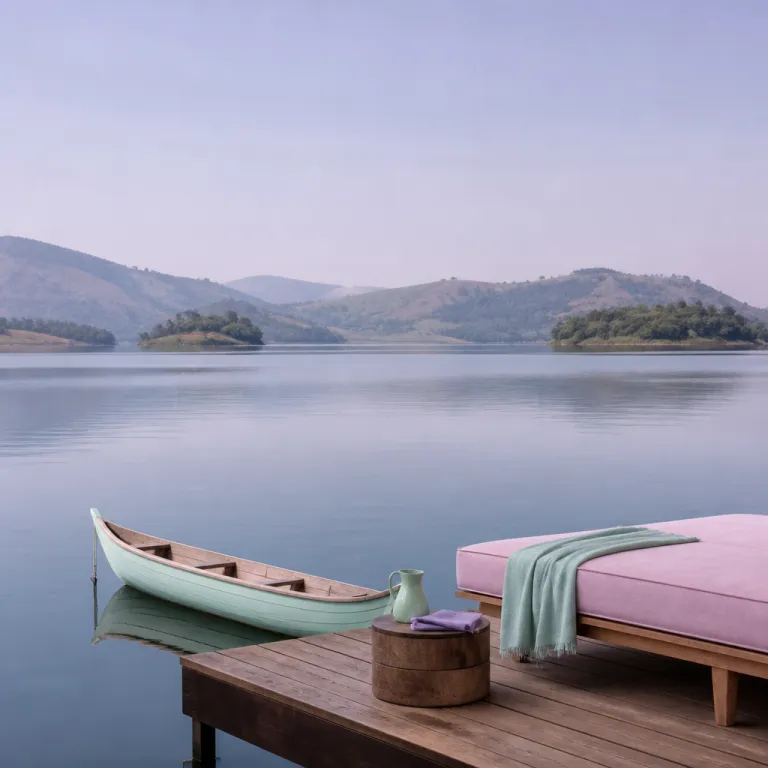
Lake Bunyonyi luxury: Uganda’s quiet highland lake escape
Lake Bunyonyi as Uganda’s quiet luxury lake Africa escape
Lake Bunyonyi in southwestern Uganda offers a rare mix of serenity and refined comfort. This highland lake covers about 46 km², with terraced hills and misty ridges framing the water in every direction. For travelers seeking a premium stay, the combination of calm water, soft air, and attentive service feels like a private sanctuary.
The lake lies near Kabale in western Uganda, close to the border with Rwanda and within easy reach of several national parks. Many guests pair time at Lake Bunyonyi with a gorilla safari in nearby Bwindi Impenetrable National Park or Mgahinga Gorilla National Park, creating a balanced itinerary of wildlife and rest. It is one of the most atmospheric places in East Africa to unwind after tracking gorilla families through dense forest, because the lake and its islands slow your pace naturally.
Although some guides call it the second deepest lake in Africa, recent bathymetric studies by Ugandan and regional researchers suggest Lake Bunyonyi is shallower than older estimates, yet still impressively deep at around 44 meters. Whether or not it is truly the deepest lake in Uganda, the steep shores and plunging bays give Lake Bunyonyi a dramatic profile. From a luxury resort deck, you watch the light move across the water while birds skim the surface and local canoes glide between islands.
The setting of Lake Bunyonyi is also culturally rich, with Bakiga and Batwa communities farming the hillsides and fishing the coves. Staying at an eco-conscious resort here lets you support these local residents directly through employment and community projects. Many premium properties around this Ugandan lake now integrate sustainability initiatives, from solar power to reforestation, so your stay aligns with responsible travel values. Recent tourism board briefings and lodge sustainability audits highlight Lake Bunyonyi as a model for low-impact, community-linked development in western Uganda.
Visitors often ask whether this mountain lake is safe for swimming, especially when planning family trips. The official guidance from local health and tourism authorities is clear and reassuring: Lake Bunyonyi is considered bilharzia-free and has no crocodiles or hippos, based on long-term monitoring by district health officers and national environmental agencies. That makes it one of the best inland swimming spots in the region, particularly for guests who want to alternate spa time with gentle laps in clear, cool water.
Choosing a luxury eco resort on Lake Bunyonyi’s islands
Premium accommodation around Lake Bunyonyi ranges from intimate lodges on private islands to larger lakefront retreats with full spa facilities. When you select a resort, look first at its relationship with the landscape, because the best properties feel woven into the terraced hills rather than imposed on them. A true eco resort on the lake will use natural materials, minimize noise, and frame views of the islands and birdlife instead of competing with them.
Several high-end lodges occupy their own island or share a larger island with only a few neighbors, giving a sense of seclusion that suits honeymooners and privacy seekers. From these islands, a short boat cruise brings you to the mainland for market visits or onward transfers, yet you return each evening to quiet jetties and lantern-lit paths. Ask your chosen resort how they manage boat transfers, because reliable schedules, safety standards, and comfortable boats will shape your overall experience of Lake Bunyonyi.
Many luxury properties now position themselves as leaders in sustainable tourism, investing in solar power, water treatment, and low-impact construction. Before you book, request a detailed sustainability factsheet or recent audit summary, so you can compare each eco resort on clear criteria such as energy use, waste management, and community partnerships. For a broader view of how Uganda’s top lodges are embracing renewable energy and conservation, you can read this in-depth sustainability audit of eco properties, available through Uganda’s most talked about eco lodges.
Service style is another key differentiator between a standard resort and a premium retreat on this Ugandan lake. The best teams anticipate your needs quietly, arranging private boat departures, tailored birdwatching excursions, or a surprise lakeside breakfast on a secluded island. One recent guest described waking to find a canoe waiting at the jetty, stocked with fresh coffee and pastries, for a silent sunrise glide between the islands. When you evaluate options, look for detailed descriptions of activities, sample itineraries, and clear communication about what is included, because this transparency usually signals a well-managed property.
Finally, consider proximity to signature experiences such as Kyahugye Island walks, visits to Punishment Island, or guided birding outings. A resort that sits closer to these highlights will reduce transfer times and maximize your time on the water. If you are planning a multi-stop journey across western Uganda, choose a property that coordinates smoothly with your safari lodge, ensuring your Lake Bunyonyi stay feels like a natural continuation of your wider Africa itinerary.
Nature retreats, birdlife, and soft adventure around Lake Bunyonyi
Lake Bunyonyi is renowned among birdwatchers for its dense concentration of species, many of which thrive in the papyrus fringes and forested slopes. From the veranda of a lakeside resort, you will often spot kingfishers, herons, and weavers without even leaving your chair. Dedicated birding guides can take you by canoe to quieter coves, where the calls of birds echo off the hills and the only other sound is the dip of your paddle in the lake.
Soft adventure is a defining feature of the Lake Bunyonyi region, especially for travelers who want activity without the intensity of a full-day safari. Gentle canoe trips between islands, guided nature walks, and low-impact mountain biking along the ridges offer movement with constant views of the water. Many guests schedule a morning birdwatching outing, an afternoon boat cruise, and an evening massage, creating a rhythm that balances exploration and rest.
For those combining lake time with wildlife, Lake Bunyonyi works beautifully as a pre- or post-stop on a gorilla safari. After trekking in a national park, your legs will appreciate the calmer pace of the lake, while your mind processes the intensity of a close gorilla encounter. Conservation-focused travelers can deepen their understanding of regional wildlife trends by consulting Uganda’s recent wildlife census, summarized in this detailed report on gorilla stability and chimpanzee gains.
Adventure seekers sometimes underestimate how many things the lake region offers beyond birding and canoeing. Zip lining has emerged as a popular activity above certain bays, giving you a brief, exhilarating flight over the water before you return to the calm of your resort. Mountain biking routes, village walks with local communities, and sunset cruises round out a varied program of things to do around this Ugandan lake.
Families and multi-generational groups appreciate that most activities can be scaled to different energy levels. While some guests tackle steeper mountain biking trails, others might opt for a gentle Lake Bunyonyi boat cruise focused on photography and birds. Your resort concierge will help you refine the long list of possible activities into a tailored plan, ensuring that every member of your group finds their ideal balance of rest and adventure.
Cultural depth, Punishment Island, and community engagement
The cultural landscape around Lake Bunyonyi is as compelling as its physical beauty, shaped by Bakiga and Batwa communities who have lived here for generations. Terraced hillsides, dug by hand, rise steeply from the lake, showing how people adapted agriculture to the contours of this western Uganda terrain. Staying in a thoughtfully managed resort allows you to engage with this culture respectfully, rather than observing it only from a distance.
One of the most talked-about islands on Lake Bunyonyi is Punishment Island, a small, haunting place with a difficult history. In past generations, some unmarried pregnant women from local communities were reportedly abandoned there, a practice that has long since ended but still resonates in local memory. When you visit Punishment Island by boat, a knowledgeable guide will help you understand the stories, the pain, and the resilience that surround this place.
Kyahugye Island offers a different perspective on life around Lake Bunyonyi, with walking trails, viewpoints, and sometimes small wildlife enclosures that introduce visitors to local species. A guided walk here can be combined with a visit to a nearby primary school on the mainland, where community projects often receive support from eco-resort guests. Many luxury lodges now include optional contributions to education or health initiatives in their rates, so your stay at the lake has a tangible positive impact.
Responsible travelers will want to shape their itineraries to include meaningful cultural encounters rather than staged performances. Look for experiences that involve small groups, fair payment to local guides, and clear explanations of how money flows back into nearby villages. A private visit to a homestead, a basket-weaving workshop, or a cooking session using crayfish from the lake can feel more authentic than large, choreographed shows.
As you move between islands and villages, you will notice how closely daily life is tied to the water. Children paddle to primary school in dugout canoes, farmers ferry produce across the lake, and church congregations gather on different islands each week. This rhythm of movement gives Lake Bunyonyi a gentle, human pulse that complements its reputation as one of the most atmospheric lakes in Africa.
Planning your Lake Bunyonyi stay within a wider Uganda itinerary
For many travelers, Lake Bunyonyi is one highlight within a longer journey across Uganda and Rwanda. The lake lies roughly 410 km southwest of Kampala by road, with the final 7 km from Kabale town bringing you down to the water’s edge. This makes it a natural pause between the savannah landscapes of Queen Elizabeth or Lake Mburo and the forested gorilla regions further south.
When planning, decide whether you want Lake Bunyonyi at the start, middle, or end of your itinerary, because each choice shapes the mood of your trip. Beginning with the lake allows you to recover from long flights, adjust to the climate, and ease into East Africa’s pace before your first safari. Ending at Lake Bunyonyi gives you space to reflect on gorilla encounters, big game sightings, and cultural visits while your body rests beside calm water.
Travelers coming from Rwanda often cross the land border and reach Lake Bunyonyi within a few hours, making it an appealing extension to a Kigali city break or a Volcanoes National Park gorilla safari. In this case, you will want your resort to coordinate border transfers, ensuring that your arrival at the lake feels seamless. Some high-end lodges even arrange private boat arrivals, so your first view of the water is from a canoe or launch rather than the road.
Within western Uganda, Lake Bunyonyi pairs well with several national parks that offer contrasting experiences. Queen Elizabeth National Park brings classic safari drives and boat trips on the Kazinga Channel, while Lake Mburo National Park offers walking safaris and cycling among zebra and antelope. By placing Lake Bunyonyi between these parks and the gorilla regions, you create a natural rhythm of activity and rest that keeps the journey enjoyable rather than exhausting.
As you finalize your route, consider including at least two nights on the lake, with three nights ideal for deeper relaxation. This gives you time for a boat cruise, a cultural visit, and at least one soft adventure activity such as mountain biking or zip lining, without feeling rushed. Your travel planner or resort concierge will help you turn the many options into a coherent, well-paced itinerary that reflects your interests and energy levels.
Adventure, wellness, and refined experiences on and around the water
Lake Bunyonyi lends itself naturally to wellness-focused stays, with cool temperatures, clean air, and quiet nights that encourage deep sleep. Many premium resorts now offer spa treatments that draw on local ingredients, from herbal compresses to lake-inspired aromatherapy oils. After a day of gentle adventure, returning to a hot stone massage or a lakeside yoga session feels perfectly aligned with the setting.
For guests who crave more adrenaline, the lake region offers a growing menu of adventure activities that still respect the environment. Zip lining above selected bays provides a brief rush and a bird’s-eye view of Lake Bunyonyi, while guided mountain biking routes trace the ridges for sweeping panoramas of the islands. Kayaking, stand-up paddleboarding, and longer boat excursions to distant islands add variety to your days on the water.
Wildlife enthusiasts often combine these lake-based activities with day trips or overnight safaris to nearby national parks. A morning game drive in Lake Mburo, followed by an afternoon swim in Lake Bunyonyi, gives you both savannah and highland perspectives in a single day. Those with more time might add a multi-day safari in Uganda’s wild northeast, using this detailed guide to luxury in Karamoja’s frontier landscapes as inspiration.
On the water itself, sunrise and sunset are prime times for photography and quiet reflection. A private boat cruise at dawn often reveals mist lifting from the lake, fishermen checking their nets, and birds gliding low over the surface in search of food. In the evening, as the hills darken and lamps flicker on across the islands, you will understand why many consider this one of the best lakes in Africa for contemplative travel.
Throughout your stay, the key is to balance activity with stillness, using the lake as both playground and refuge. Your resort team will help you shape each day’s plan, suggesting when to rest on your veranda and when to venture out for a new adventure. In this way, Lake Bunyonyi becomes not just a scenic stop, but a carefully curated retreat that reflects the evolving face of luxury travel in Uganda.
Key figures and practical statistics about Lake Bunyonyi
- Lake Bunyonyi covers approximately 46 km² in the Kabale District of southwestern Uganda, giving it a compact yet varied shoreline that is ideal for boat-based exploration (figures reported in regional geographic surveys and Uganda tourism materials, including Uganda Tourism Board briefing notes).
- The lake contains around 29 islands, ranging from tiny uninhabited islets to larger islands with lodges and villages, which allows travelers to design highly customized island-hopping itineraries (numbers commonly cited by local tour operators and district tourism offices, and echoed in national tourism statistics).
- Maximum recorded depth is about 44 meters, which makes Lake Bunyonyi one of the deeper inland lakes in Uganda, although newer measurements suggest it may not be the absolute second deepest lake in Africa as once claimed (based on recent hydrological studies, bathymetric surveys, and academic fieldwork in the Kigezi highlands).
- The drive from Kampala to Kabale, the gateway town for Lake Bunyonyi, is roughly 410 km, usually taking 7 to 9 hours depending on road conditions and stops, so many travelers choose to break the journey with a night in another western Uganda destination.
- Tourism authorities report a steady increase in visitor numbers to Lake Bunyonyi in recent years, driven by interest in bird diversity, eco-resort development, and the lake’s reputation as a safe, bilharzia-free swimming area compared with some other African lakes (according to district tourism reports and Ministry of Tourism performance reviews).
Frequently asked questions about Lake Bunyonyi luxury stays
Is Lake Bunyonyi safe for swimming and water activities ?
Lake Bunyonyi is considered safe for swimming because it is free from bilharzia and does not host crocodiles or hippos, according to local health authorities and long-term monitoring by district officials. The water can feel cool due to the lake’s elevation, so many guests prefer midday swims when temperatures are higher. Resorts usually mark safe entry points and may provide life jackets for less confident swimmers.
What are the most popular activities for luxury travelers on the lake ?
High-end guests typically enjoy private boat cruises, guided birdwatching, and gentle canoe trips between islands. Many also add soft adventure options such as zip lining, mountain biking, or lakeside yoga sessions arranged by their resort. Cultural visits to local communities and historical sites like Punishment Island round out a balanced program.
How many days should I spend at Lake Bunyonyi within a Uganda itinerary ?
Two nights is the minimum recommended stay, giving you one full day for activities and relaxation. Three nights allows time for a boat cruise, a cultural visit, and at least one adventure activity without feeling rushed. Travelers combining the lake with gorilla trekking or a wider safari in western Uganda often allocate three to four nights for deeper rest.
Can I combine Lake Bunyonyi with gorilla trekking and a classic safari ?
Yes, Lake Bunyonyi sits within easy driving distance of Bwindi Impenetrable National Park and Mgahinga Gorilla National Park, making it an ideal base before or after gorilla trekking. It also links well with savannah parks such as Queen Elizabeth and Lake Mburo, where you can enjoy traditional game drives and boat safaris. Many tour operators design itineraries that move from national park wildlife to lake relaxation in a smooth sequence.
What should I pack for a luxury stay at Lake Bunyonyi ?
Pack layered clothing, including a warm sweater or light jacket, because evenings around the lake can be cool. Comfortable walking shoes, a swimsuit, binoculars for bird viewing, and a good camera will enhance your experience. Most premium resorts provide toiletries and basic amenities, so you can keep luggage focused on personal comfort and outdoor activities.