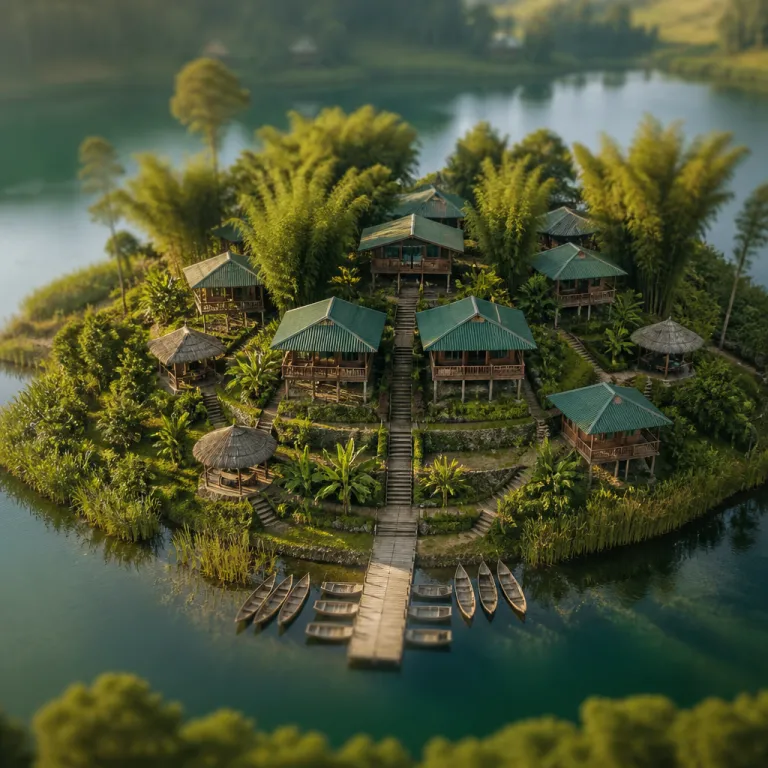
Lake Bunyonyi Uganda as a luxury base in south western highlands
Lake Bunyonyi in Uganda stretches quietly between Kabale and Kisoro, a highland body of water framed by terraced hills. This serene Uganda lake sits in the south western mountains near the Rwanda border, giving luxury travellers a rare mix of calm scenery and easy access to gorilla trekking and wider safari circuits. Many people now choose a refined resort on the shores of this lake in Africa as their main base instead of staying in a busy town hotel, using it as a tranquil hub between national parks.
This is not the deepest lake on the continent, yet Lake Bunyonyi is often described as one of the deeper lakes in the region, with a maximum depth commonly reported at about 40–45 metres across a surface of roughly 46 km². That scale feels intimate compared with the Nile corridor or the vast lakes of East Africa, which is exactly why premium guests appreciate the quiet, sheltered feel of this western Uganda retreat. From a luxury deck you can watch mist lift from the Bunyonyi basin while fishermen glide past in dugout canoes, and the view changes subtly every few minutes as light moves across the terraced hills.
Because Kabale town lies only about 30 minutes away by car, high end travellers can land in Kigali or Entebbe, transfer through the Kisoro–Kabale road network, and reach their resort at Lake Bunyonyi without long bush drives. This proximity makes the lake a strategic place for people planning multi stop itineraries that include a national park safari, a cultural tour with Bakiga and Batwa people, and perhaps a detour to Rwanda. Luxury booking platforms and specialist Uganda tour operators now highlight this south western Uganda setting as a central hub where guests can rest between more demanding activities like gorilla trekking in nearby parks.
Hidden islands and heritage: choosing the right place to stay
The 29 islands scattered across Lake Bunyonyi create a natural maze of coves, peninsulas, and sheltered bays. Each island has its own character, so when you book a premium resort or lodge you are also choosing a specific atmosphere and cultural story. Some island settings feel remote and wild, while others sit closer to Kabale with easier access for people who prefer shorter boat rides and faster transfers.
Bushara Island is one of the most established places for eco focused stays, and several luxury friendly properties now blend timber architecture with soft linens, hot showers, and curated canoe excursions. Other islands on the lake specialise in privacy, offering only a handful of suites so that every view across this Uganda lake feels entirely your own. When you plan to visit Lake Bunyonyi, study the map carefully and decide whether you want to wake up on a central island, a secluded peninsula, or a hillside resort overlooking the entire body of water, and check whether your preferred lodge includes private boat transfers.
History adds another layer to your choice of place, especially around Punishment Island, where young Bakiga women were once abandoned as a harsh social penalty. Today, visiting this island on a guided tour allows people to reflect on how the Bakiga and Batwa people have reshaped their communities around education, tourism, and cultural performances. Solo travellers who want deeper context and flexible days around Lake Bunyonyi Uganda can benefit from planning with a specialised solo travel field guide to Uganda, which explains how to move confidently between Kabale town, the islands, and nearby parks without feeling rushed.
From lake views to gorilla trekking: crafting a premium safari circuit
Lake Bunyonyi sits between major conservation areas, making it a natural pause on a wider Bunyonyi safari route. Many travellers pair a few nights on the lake with gorilla trekking in Bwindi Impenetrable National Park or Mgahinga Gorilla National Park, both reachable by road from the Kabale and Kisoro corridor. This combination lets people balance intense wildlife encounters with slow mornings on the water, wrapped in a sweater as cool highland air drifts across the surface.
On a typical itinerary, guests arrive from Rwanda after a scenic drive, check into a lakeside resort, and then head out the next day for gorilla trekking in the forested slopes above western Uganda. After hours on steep trails, returning to a hot bath, a firelit lounge, and a quiet view over the lake feels like a deliberate reset rather than a simple overnight stop. Some luxury booking platforms now package this as a signature Bunyonyi safari circuit, where the lake becomes the emotional centre of a journey that also includes a classic savannah national park and perhaps a short detour along the Nile.
Travellers who enjoy remote elegance sometimes extend their circuit beyond the south western highlands to other refined corners of the country, such as luxury stays in the Karamoja sub region where remote Uganda meets refined comfort. By linking these regions, people experience both the volcanic landscapes around Lake Bunyonyi and the wide open plains further north, all while relying on curated transfers and vetted resorts. The key is to edit your route carefully so that each place, from Kabale town to distant parks, feels like a considered chapter rather than a rushed checklist.
What luxury guests should know about the lake, climate, and activities
Lake Bunyonyi is a freshwater body of water formed when volcanic activity blocked an ancient valley, leaving a calm basin ringed by steep hills. Unlike some other lakes in Africa, this Uganda lake is generally reported by local tourism and health authorities as free from crocodiles and hippos, and it is also widely described as bilharzia free, which makes swimming a realistic option for confident swimmers. Official tourism and health guidance often summarises this clearly as “Yes, it's bilharzia-free and has no crocodiles or hippos,” though guests should still follow lodge advice and check the latest local updates.
The high altitude around Kabale and the Kisoro–Kabale highlands means temperatures can drop sharply in the evenings, so even in a luxury resort you should carry a sweater for dinners on open decks. Mornings often start with mist over the lake, then clear into bright sunshine that highlights the terraced slopes cultivated by Bakiga farmers. This shifting light is ideal for photography, and many people choose to edit their images later to emphasise the contrast between deep green hills, the reflective surface of Lake Bunyonyi, and the scattered islands.
Activities for premium guests usually include private canoe rides, guided island tours, and bird watching from elevated platforms where you can spot kingfishers, herons, and other birds that thrive around this sheltered basin. Some resorts offer curated cultural evenings with Batwa people and Bakiga dance troupes, while others focus on wellness with lakeside yoga and massage pavilions. When you visit Lake Bunyonyi Uganda, ask your lodge to arrange a tailored programme that balances quiet time on the water with excursions to nearby markets in Kabale town or to viewpoints that reveal how this deep, highland lake sits within the wider south western landscape.
Cultural encounters with Bakiga and Batwa people around Lake Bunyonyi
The hills surrounding Lake Bunyonyi are home to Bakiga communities whose terraced farms climb steep slopes above the water. Staying in a premium resort here does not mean isolation from local life, because many lodges partner with Bakiga guides, craft cooperatives, and farmers to create meaningful encounters. Guests can walk through villages, learn how traditional sorghum beer is brewed, and understand how this place has evolved from subsistence farming to a tourism supported economy.
Batwa people, historically forest dwellers, also live in settlements near the lake and in the wider western Uganda region. Some cultural tours invite visitors to hear Batwa music, watch traditional dances, and listen to elders explain how displacement from ancestral forests has reshaped their identity. When arranged respectfully through community led organisations, these visits help people see Lake Bunyonyi not just as a scenic Uganda lake but as a living cultural landscape where multiple histories intersect.
Many high end travellers appreciate curated culinary experiences that include local ingredients such as crayfish from the lake, fresh vegetables from terraced gardens, and coffee grown on nearby slopes. For a deeper understanding of regional flavours beyond the hotel buffet, you can read about eating through Uganda without ever sitting in a hotel buffet, which highlights street food and contemporary dining in Kabale, Kampala, and other hubs. By combining these food focused insights with time on the islands, your stay at Lake Bunyonyi Uganda becomes a layered journey through both taste and tradition.
Practical booking tips for premium stays on Lake Bunyonyi Uganda
When comparing luxury properties around Lake Bunyonyi, start by deciding whether you prefer a mainland resort with road access or an island lodge reached only by boat. Mainland places near Kabale offer faster transfers for people continuing to Rwanda or to a national park safari, while island resorts provide deeper immersion in the calm rhythms of this body of water. Both options can deliver high comfort levels, but the logistics and daily pace feel very different.
Look closely at how each property manages its lake activities, from private boat transfers to guided bird watching tours that highlight the many birds nesting in papyrus fringes. A well run resort will include safety briefings, life jackets, and experienced local captains who understand changing weather on Lake Bunyonyi. It is wise to use local guides for island tours, not only for navigation but also for insights into Bakiga farming techniques, Batwa people heritage, and the layered stories behind Punishment Island and other sites.
Finally, consider seasonality and how it affects both the view and your wider itinerary across south western and western Uganda. During drier months, roads between Kisoro and Kabale town are usually easier, which helps if you are linking Lake Bunyonyi Uganda with gorilla trekking or a classic safari along the Nile corridor. Whatever time you choose to visit Lake Bunyonyi, a carefully edited plan that balances rest, culture, and wildlife will turn this quiet corner of lake Africa into the highlight of your journey.
Key figures and geography of Lake Bunyonyi Uganda
- Lake Bunyonyi covers about 46 km² in the south western highlands of Uganda, making it a compact yet substantial body of water compared with many crater lakes in the region (area estimates align with figures used by the Uganda Tourism Board and regional geographical summaries, though exact measurements vary slightly by source).
- The maximum recorded depth of Lake Bunyonyi is commonly cited at around 40–45 metres, which places it among the deeper lakes in Uganda even though it is not the absolute deepest lake in Africa (depth values are drawn from peer reviewed limnological studies and conservation reports that acknowledge some uncertainty).
- There are approximately 29 islands scattered across the lake, ranging from tiny uninhabited islets to larger islands like Bushara Island that host resorts and community projects (island counts match commonly cited tourism and environmental assessments used by regional planners).
- The lake lies a short drive, roughly 30 minutes, from Kabale town, which serves as the main urban gateway for travellers arriving from Rwanda or other parts of western Uganda (timings based on local transport guidance, tour operator briefings, and Uganda Tourism Board visitor information).
- Lake Bunyonyi formed when volcanic activity blocked an ancient valley, a process that dates back thousands of years to the late Pleistocene, illustrating how geological forces shaped today’s tourism landscape (origin summarised from regional geological and volcanology research published in academic journals).
FAQ about luxury stays on Lake Bunyonyi Uganda
Is Lake Bunyonyi safe for swimming for luxury travellers?
Lake Bunyonyi is considered safe for swimming because it is free from crocodiles and hippos according to local observations, and it is also described as bilharzia free by many regional health and tourism authorities. Many high end resorts provide designated swimming areas and sometimes floating platforms, though guests should still be confident swimmers due to variable depths. Always follow lodge guidance, check current local health advice, and avoid swimming alone or in poor visibility.
What activities can I expect at a premium resort on Lake Bunyonyi?
Most luxury properties around Lake Bunyonyi Uganda offer canoeing in traditional dugouts, guided island tours, and bird watching excursions focused on the rich birdlife along papyrus fringes. Cultural visits to Bakiga villages and Batwa people communities are common, as are day trips to nearby gorilla trekking bases in Bwindi or Mgahinga. Some resorts also provide spa treatments, yoga decks, and curated dining that highlights regional produce.
How do I get from Kabale town to my resort on Lake Bunyonyi?
From Kabale town, the lakeshore is typically about a 30 minute drive on a mix of paved and graded roads, using either private transfers arranged through your booking platform or local taxis. If you are staying on an island, your resort will usually include a scheduled boat pickup from a designated landing site. Travellers arriving from Rwanda or from other parts of western Uganda often coordinate these transfers as part of a wider safari itinerary.
Can I combine Lake Bunyonyi with gorilla trekking and a classic safari?
Yes, Lake Bunyonyi Uganda fits naturally into itineraries that include gorilla trekking in Bwindi or Mgahinga and a savannah national park safari such as Queen Elizabeth National Park. Many operators design routes that move from Kigali or Entebbe to Kabale, then on to gorilla regions and finally to the Nile or other wildlife areas. Using Lake Bunyonyi as a central rest stop allows you to recover between demanding trekking days while still enjoying scenic views and cultural experiences.
What should I pack for a luxury stay on Lake Bunyonyi?
Because the area sits at high altitude in south western Uganda, evenings can be cool, so pack a warm sweater or light jacket even if days are sunny. Comfortable walking shoes are useful for village visits and viewpoints above the lake, while neutral clothing works best for gorilla trekking or national park excursions. Do not forget a good camera, as the changing light over Lake Bunyonyi, the islands, and surrounding hills offers exceptional opportunities for photography.