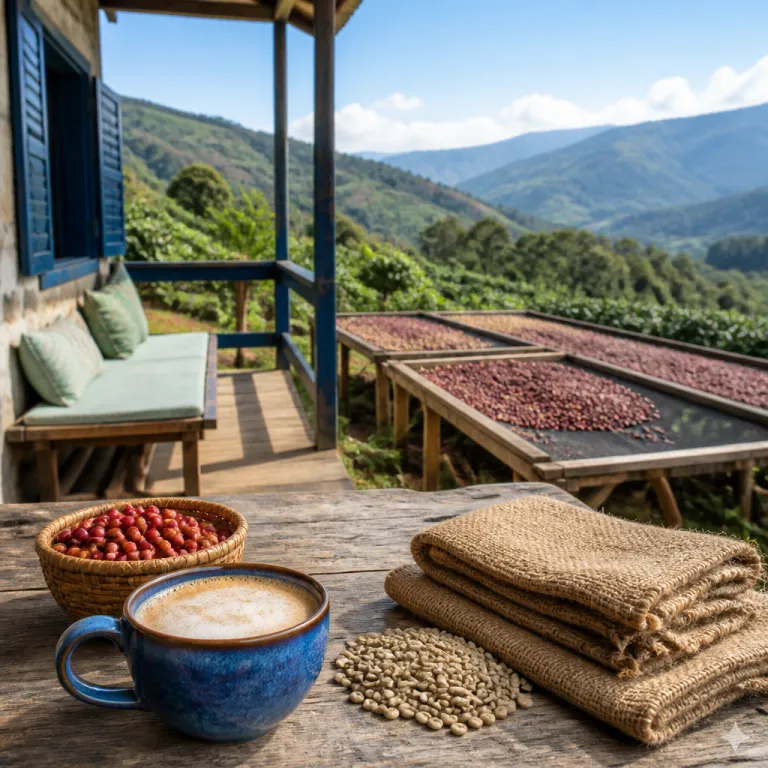
The Rwenzori coffee corridor: altitude, rivers and an emerging lodge culture
The Rwenzori foothills in western Uganda rise to around 1,800 metres above sea level, creating a cool, green corridor where arabica thrives and smallholder coffee farm stays are slowly multiplying. Here, a new generation of Uganda coffee lodge experiences is taking shape, with each retreat tucked between terraced coffee plots, banana groves and compact villages. Travellers often arrive expecting a basic camp in the mountains and instead find a refined, small-hotel style of hospitality wrapped in working landscapes.
This is not safari country in the classic sense; it is coffee estate country, where the mountain light falls over neat rows of cherries and distant forest ridges. Rivers cut through the valleys, feeding both the farm terraces and the communities that cultivate them, and many a coffee lodge now frames these waterways as part of its signature views. When you explore this corridor, you move between river crossings, village paths and garden trails rather than game tracks, following the same routes farmers use to bring cherries to local washing stations and cooperative hubs.
Kyambura Gorge Lodge, once a modest coffee processing plant, now anchors the southern end of this circuit as a luxury lodge overlooking Queen Elizabeth National Park. North toward the Rwenzori, Ruboni Community Camp offers a more rustic tented camp feel, with the forest and mountain slopes pressing close. Between them, a scattering of farm-based retreats and at least one dedicated Uganda coffee lodge invite you to visit for both altitude and aroma, forming what local tour operators increasingly describe as the “Rwenzori coffee lodges” circuit, typically linked by three- to four-hour road transfers via Kasese or Fort Portal.
Life on a coffee farm stay: from cherry picking to cupping for two
A stay at a Rwenzori coffee lodge follows the rhythm of the farm rather than the timetable of a city hotel. Mornings often begin with a walk through the garden and surrounding coffee plots, where you learn how altitude, shade trees and soil shape the flavour in your cup. As the sun climbs over the mountain ridge, you may join pickers in the estate rows, selecting only ripe red cherries by hand under the guidance of local farmers who explain how selective harvesting protects both quality and yield.
Later, guests are invited into the wet mill to watch cherries pulped, fermented and washed, before they are laid out on raised beds to dry locally in the highland air. You might help turn the parchment, then step back to the lodge terrace for a slow lunch while rivers glint in the distance and the forest hums below. Afternoon becomes a masterclass in roasting and cupping, with side-by-side tastings of Rwenzori and Mount Elgon arabica that reveal how different mountain climates express themselves in the same bean, turning a simple coffee break into a shared learning experience. As one recent visitor put it in a guestbook comment, “We finally understood what ‘single origin’ means when we could see the exact hillside our cup came from.”
Evenings at these lodges are unhurried, with firepits, blankets and a final pour-over brewed from beans you helped process earlier in the day. For travellers used to urban luxury, the romance lies in this shared work and the quiet that follows, not in a crowded hotel bar. If you want to balance farm immersion with a more classic urban stay, pair your trip with a night or two in Kampala at one of the refined hilltop properties featured in this guide to serene suites above the capital’s green hills.
The Coffee Lodge at Clarke Farm: where a working estate meets refined hospitality
The Coffee Lodge at Clarke Farm sits on a 1,500-acre working coffee estate in the wider Rwenzori region, and it is the clearest expression yet of Uganda’s farm tourism ambitions. This lodge, located within a fully operational Clarke Farm, means guests wake to the sound of tractors and birds rather than traffic, yet the service standard is firmly premium. Rooms look over an amazing hilltop panorama of coffee blocks, rivers and distant forest, turning the estate itself into the main attraction and giving every stay the feel of a private coffee tour. Typical nightly rates fall in the mid- to upper-range for Uganda (often from around US$200–350 per room, depending on season and board basis), and reservations are usually handled directly via the lodge or trusted tour operators.
Days here are structured around both comfort and immersion, with guided walks through the Clarke Farm fields, visits to the on-site processing facilities and long lunches that showcase ingredients sourced locally. You can join a tour that follows the river down from the amazing hilltop vantage point to the lower terraces, tracing how water management underpins both coffee quality and community life. Back at the lodge, tastings highlight single-origin lots from the farm, allowing you to compare them with beans from other parts of Uganda in a focused, almost sommelier-style session that suits both enthusiasts and curious beginners. According to the estate’s own hosting team, “Guests see every step from seedling to export-ready bean, which makes each cup feel earned.”
Ruboni Community Camp, by contrast, leans into its role as a community hub and tented camp base for Rwenzori trekking, yet it also offers meaningful coffee tours. The operators summarise their offer clearly in their own words: “Guests can participate in coffee tours, cultural experiences, and nature hikes.” For travellers who prioritise sustainability, both properties sit comfortably alongside the country’s most progressive eco-focused stays, many of which are profiled in our in-depth look at Uganda’s lodges powered by sunlight and conviction.
Pairing coffee country with Rwenzori trekking and Queen Elizabeth safaris
One of the quiet luxuries of booking a Uganda coffee lodge in the Rwenzori foothills is how easily you can combine it with classic wildlife and mountain experiences. From Kyambura Gorge Lodge, game drives into Queen Elizabeth National Park are a short transfer away, allowing you to track lions in the morning and tour a nearby coffee farm in the afternoon. The lodge’s origins as a converted coffee plant give it a natural bridge between farm culture and safari-style service, making it a practical base for travellers who want both, especially on itineraries that link Entebbe, Kasese airstrip and the Rwenzori corridor by road or short domestic flights.
Farther north, Ruboni Community Camp functions as a tented camp style base for multi-day Rwenzori treks, where you climb into true mountain terrain while still returning to a warm meal and simple comfort. Guests can spend a few nights acclimatising at around 1,800 metres, joining a guided tour of local villages and forest trails before committing to longer hikes. The contrast between the dense forest and open coffee slopes is striking, and it underlines how varied this corner of Uganda can feel within a single visit, especially for first-time visitors to the region who want both trekking and gentle farm walks.
For those planning a longer itinerary, it makes sense to thread in a lakeside pause between coffee country and the capital, especially if you value quiet time together. Our detailed guide to serene luxury stays on Lake Bunyonyi outlines properties where the focus shifts from farm to water, with canoes replacing coffee sacks. By the time you return to Kampala or another city hotel, you will have moved through rivers, mountains and gardens in a way that feels coherent rather than rushed.
Romance, room keys and what these coffee lodges actually look like
For couples and small groups, the appeal of a Uganda coffee lodge lies as much in the spaces between activities as in the farm tours themselves. Rooms at The Coffee Lodge at Clarke Farm tend to frame the landscape, with large windows or verandas looking over garden beds, coffee rows and distant rivers. Interiors are usually understated rather than flashy, using locally woven textiles, timber and stone to keep the focus on the estate and the mountain light, and many properties now add simple image galleries with captions and alt text describing these views (for example, “sunrise over Rwenzori coffee terraces from lodge veranda”).
Kyambura Gorge Lodge offers a different aesthetic, with its past as a coffee processing site visible in the industrial lines of some structures, softened by warm fabrics and art from across Uganda. Here, the romance comes from the contrast between the wild gorge, the nearby riverine forest and the polished service you expect from a high-end lodge. Ruboni Community Camp, while simpler, delivers its own charm through tented rooms that open directly to forest sounds and clear night skies, ideal for travellers who value atmosphere over formality and do not mind fewer amenities or shared facilities.
Across these properties, you can expect thoughtful touches that speak to both coffee and place, from in-room brewing kits stocked with beans roasted on site to guided sunrise walks through the farm plots. Shared cupping sessions become a quiet ritual, a way to explore flavour together while the mountain air stays cool outside. It is a different kind of luxury from a city hotel suite, but for many visitors it proves more memorable and more deeply connected to Uganda’s landscapes, especially when combined with other coffee farm stays in Uganda and booked through operators who know the region well.
FAQ
Where exactly are Uganda’s main coffee lodges in the Rwenzori region?
The key Uganda coffee lodge style properties sit in the Rwenzori foothills of western Uganda, roughly around 0.18° north and 30.08° east. Kyambura Gorge Lodge lies near Queen Elizabeth National Park, while Ruboni Community Camp and several farm-based stays are closer to the central Rwenzori corridor. The Coffee Lodge at Clarke Farm is positioned on a large working estate within this broader highland belt, typically reached via road transfers of two to four hours from Kasese or Fort Portal, depending on route and seasonal road conditions.
What activities can couples expect during a coffee farm stay?
Most Rwenzori coffee lodges offer guided walks through the estate, hands-on cherry picking in season and visits to processing facilities. Guests usually join roasting demonstrations and structured cupping sessions, often comparing Rwenzori arabica with beans from Mount Elgon. Many properties also arrange nature hikes, cultural visits and, in some cases, game drives or river excursions, allowing you to build a flexible itinerary around both coffee and landscape, with half-day and full-day options that can be tailored to different fitness levels.
How do these lodges support local communities and sustainability?
The leading properties employ staff from nearby villages, source food and materials locally and partner with community cooperatives that manage farm plots. Some, like Ruboni Community Camp, are community run and reinvest a portion of revenue into local projects and conservation work, as outlined in their own promotional materials and booking information. Others, including The Coffee Lodge at Clarke Farm, focus on long-term estate management that balances production with environmental stewardship and transparent relationships with surrounding growers, often sharing agronomy training and water management practices.
Are Rwenzori coffee lodges suitable for families as well as couples?
While the narrative around Uganda coffee lodge stays often targets couples, most properties are family friendly. The operators themselves state that “Yes, they offer family-friendly activities and accommodations.” Children can join shorter farm tours, garden walks and gentle forest hikes, though longer mountain treks may suit older or more experienced hikers, and parents should always confirm age guidelines, room configurations and child rates when booking.
How should travellers prepare for the altitude and climate in the Rwenzori foothills?
The main coffee lodges sit around 1,800 metres, which usually feels pleasantly cool rather than extreme, but temperatures can drop at night and rain showers are common. Pack layers, a light waterproof jacket for forest walks and comfortable shoes suitable for farm and mountain paths. Booking in advance and engaging local guides is strongly recommended, especially if you plan to combine your stay with Rwenzori trekking or Queen Elizabeth safaris, as transfer times, trail conditions and park entry procedures can vary with the season.