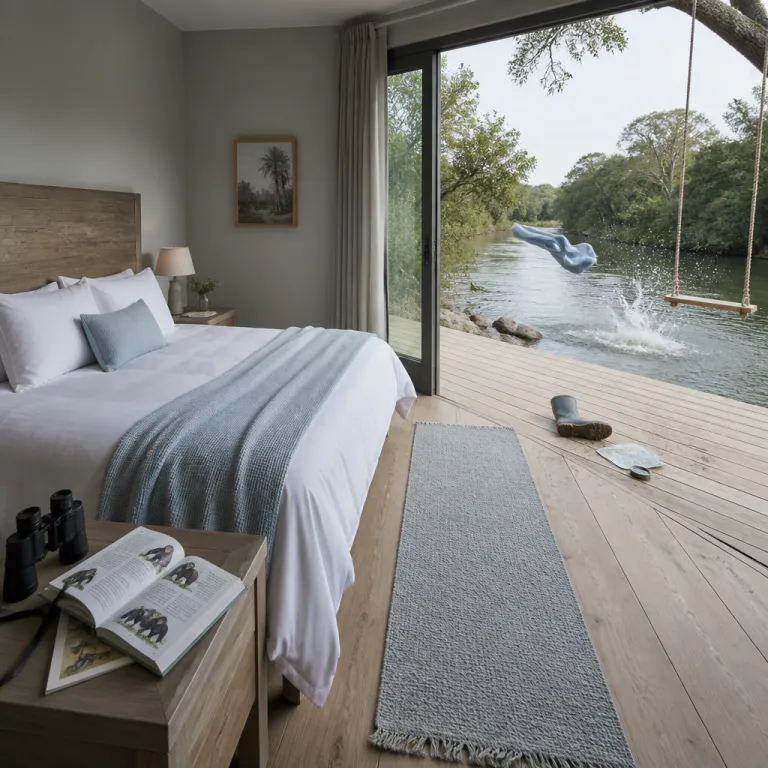
Family lodge Uganda: where primates, pools and real beds align
Family lodge Uganda choices divide quickly between marketing promises and properties that genuinely work for children. In the premium and luxury space, the lodges that succeed understand that a Uganda safari with kids is about pacing, safety and flexible sleeping arrangements rather than just a high thread count. For a traveler arriving from Rwanda Uganda or further afield, the goal is simple yet demanding; every person in the family should end each night tired, happy and in a real bed, not on a makeshift single mattress squeezed into a corner.
Across western Uganda, from the great rift escarpments above Queen Elizabeth National Park to the forest edge of Kibale, a handful of lodges now design with families first. These are the places where a child can watch a chimpanzee swing through the canopy after breakfast, swim in a fenced pool after lunch and still sit down to a kids’ menu that arrives on time. When you evaluate any lodge, look beyond the word “family” on the website and ask how many days of the year they actually host children, what their low and high season policies are, and whether their family rates are based on realistic sleeping configurations.
The best family lodge Uganda options share several traits that matter more than décor. They offer interconnecting rooms or two bedroom cottages, accept flexible bed setups for a third or fourth person and keep their dollars USD pricing transparent, including child policies. They also understand that people travel in different formations; a single parent with two children needs a different layout and rate structure from a classic two adult, two child gorilla family that is combining Rwanda Uganda with an extended safari Uganda circuit.
Which parks work for which ages
Uganda’s national parks are not equal when you are planning a family lodge Uganda itinerary. Bwindi Impenetrable National Park is iconic for gorilla trekking, yet gorilla permits require each person to be at least fifteen years old, which immediately shapes how many days you can spend there with younger children. By contrast, Kibale Forest and the surrounding rift valley landscapes offer chimpanzee tracking with lower age limits, which opens up primate experiences for pre teens who are not yet ready for a full gorilla chimpanzee trek.
For families with under tens, basing yourselves near Kibale or in the crater lakes region is often wiser than committing to Bwindi. Here, lodges such as Turaco Treetops, Primate Lodge Kibale, Kibale Lodge and Chimps Nest Lodge sit close to the forest yet offer playgrounds, indoor playrooms or open lawns where children can run safely between activities. Queen Elizabeth National Park, especially around Kyambura Gorge Lodge, adds classic game drives and boat trips on the Kazinga Channel, which work well for mixed age groups and for people who want a softer introduction to safari Uganda before attempting longer treks.
Teenagers who meet the gorilla age threshold can handle a more ambitious Uganda safari route that includes Bwindi and possibly a hop across the border to Rwanda. In that case, you might spend two or three days near Kibale for chimpanzee encounters, then continue south through the great rift landscapes to Bwindi Lodge or another high end property near the trailheads. Younger siblings can stay back at the lodge with a guide for nature walks and golden monkey themed activities while older children and one parent join the gorilla family trek.
Lodges that genuinely welcome children, not just tolerate them
On the ground, the difference between a marketing line and a true family lodge Uganda becomes obvious within an hour of arrival. At Turaco Treetops near Kibale, for example, the playground, indoor playroom and swimming pool are not afterthoughts; they sit at the heart of the property, so children are visible, supervised and part of the social life rather than hidden away. Primate Lodge Kibale and Kibale Lodge lean into their forest setting, offering short guided walks where a child might see a chimpanzee or red colobus monkey before lunch, then return to comfortable cottages with proper beds rather than sofa conversions.
Kyambura Gorge Lodge, perched above the rift valley near Queen Elizabeth National Park, has become a reference point for families who want style without stiffness. Its pool overlooks the great rift escarpment, yet the staff are used to children splashing after game drives, and the kitchen understands that a child who has tracked a chimpanzee troop for hours will want a fast, familiar plate of food. Chimps Nest Lodge, meanwhile, offers an eco friendly base where monkeys and sometimes chimps pass through the property, giving people a sense that the forest is not a backdrop but a living neighbour.
When you assess these lodges, ask specific, frequently asked questions about infrastructure rather than vague promises. Do they have a kids’ menu every night or only in high season when more families are present? Are babysitting and child friendly guides available for a few dollars USD per hour, and are those services based on trained staff rather than whoever is free? The properties that answer these asked questions clearly tend to be the ones where a family can stay several days without friction.
Family units, interconnecting rooms and real beds
Sleeping arrangements are where many so called family lodge Uganda options fail. A rollaway single squeezed into a narrow tent might work for one night, but it becomes a problem on a seven night Uganda safari when everyone needs proper rest between early starts. The better lodges offer two bedroom cottages, interconnecting rooms or family villas where each person has a real mattress, a reading light and somewhere to put their bag.
At Turaco Treetops and Primate Lodge Kibale, family cottages often include separate sleeping areas for parents and children, which preserves privacy without sacrificing proximity. Kyambura Gorge Lodge and Bwindi Lodge, both positioned along the great rift corridor, have reconfigured some bandas into family friendly layouts, sometimes with mezzanine levels or twin rooms tucked behind the main bedroom. As a concrete example, a typical two bedroom cottage might be priced at a flat dollars USD rate for two adults and two children under twelve, with a reduced supplement for a fifth bed in the living area, instead of charging the full per person per night rate for every child.
In low season, many properties are more flexible about how they configure rooms and how they structure dollars USD rates for extra beds. During peak months such as June to August or the popular December March window, policies tighten and Uganda high demand means that interconnecting rooms sell out quickly. Book early, specify the ages of your children and confirm in writing that each child will have a proper bed rather than a mattress on the floor.
Swimming, wild water and where families should and should not plunge
Water is non negotiable for most children, so a family lodge Uganda without a swimming option needs a very strong alternative. In western Uganda, that usually means a pool rather than open water, because many lakes and rivers carry bilharzia risk or have strong currents that are unsuitable for swimming. The lodges that understand families fence their pools, provide shallow sections and keep a close eye on maintenance so that a quick dip after a hot chimpanzee trek feels like a reward, not a risk.
Turaco Treetops and Kyambura Gorge Lodge both offer well positioned pools that work for mixed age groups, with views across forest or rift valley plains that remind you why you came. Around Kibale, several lodges now combine small pools with lawns where younger children can play safely while older siblings swim under supervision. On Lake Victoria, resort style properties near Entebbe and the islands are quietly raising their standards, and you can read a detailed take on these freshwater retreats in this guide to family tuned Lake Victoria resort weekends.
Rivers such as the Nile near Jinja are spectacular but should be treated as look but do not swim zones for children, except in clearly designated and supervised areas. Lakes in the rift valley crater region can be tempting, yet most families are better off sticking to lodge pools unless a property explicitly confirms safe swimming conditions. Ask directly whether the pool is fenced, whether there is a shallow end and whether lifeguards or trained staff are present during the busiest hours of the day.
Season, climate and how water shapes your day
Uganda’s equatorial position means that a family lodge Uganda stay is possible year round, but the rhythm of rain and sun matters. Dry months such as June to August and the popular December March period are often labelled high season, with clearer trails for chimpanzee tracking and more predictable pool time between activities. In the wetter shoulder months, you might trade slightly lower rates and quieter lodges for the chance that an afternoon storm will close the pool for a few hours.
Families who prioritise swimming often prefer the drier windows, especially if they are combining a Uganda safari with time on Lake Victoria or in the rift valley crater lakes. During these months, the contrast between a hot, dusty game drive and a cool plunge becomes part of the daily ritual, and children quickly learn to measure their days in swims rather than in hours. In low season, the forest feels wilder, the great rift escarpments are greener and some lodges will include complimentary laundry or small upgrades to keep occupancy steady.
Whatever the month, pack swimwear for every person, including a spare set for children who might jump in twice a day. Remember that evenings at altitude, especially near Bwindi or the higher reaches of the rift valley, can feel cool even after a hot afternoon by the pool. A light fleece and quick drying clothes help you move comfortably between wet swims, forest walks and relaxed lodge dinners without overpacking.
Chimpanzees as the family friendly alternative to gorillas
For many parents, the phrase family lodge Uganda is shorthand for one big question; how do we give our children a meaningful primate experience when gorilla trekking is restricted to those aged fifteen and above. The answer lies in Kibale Forest and a handful of other chimpanzee strongholds, where age limits are lower and the walking is often less demanding. Kibale alone holds an estimated one thousand chimpanzees, making it one of the most reliable places in Africa to see these primates in the wild.
Primate Lodge Kibale, Turaco Treetops, Kibale Lodge and Chimps Nest Lodge all sit within easy reach of the park headquarters, which means early starts are manageable even for younger children. Guided chimpanzee tracking here typically involves a few hours on forest trails, with a strong chance of seeing a chimpanzee community feeding, grooming or moving through the canopy. For families wanting a deeper dive, Kibale also offers habituation experiences where older children, usually twelve and above, can spend extended hours with a gorilla chimpanzee cousin species, watching complex social behaviour unfold at close range.
If you are weighing up options, this detailed article on tracking chimpanzees with kids in Kibale Forest breaks down the logistics, age limits and pacing. It is worth remembering that while a gorilla family encounter is extraordinary, a well run chimpanzee trek can be just as powerful for a child who is still too young for Bwindi. The forest soundtrack, the sudden crash of branches as a chimp swings overhead and the quiet walk back to the lodge afterwards often become the memories that people talk about long after the trip.
Golden monkeys, classic game and how to mix your primates
Families who want to broaden their primate palette beyond chimpanzees can look to golden monkey tracking in Mgahinga Gorilla National Park, near the Rwanda Uganda border. Here, age limits are often more flexible than for gorillas, and the walking is shorter, which suits energetic children who like quick rewards. Combining a few days in Kibale with a stop in Mgahinga and then time in Queen Elizabeth National Park creates a classic Uganda safari loop that balances primates, plains game and downtime by the pool.
In Queen Elizabeth, boat trips on the Kazinga Channel deliver elephants, hippos and buffalo at eye level, which can be more engaging for younger children than scanning distant hillsides for a single lion. Game drives across the rift valley floor add variety, and lodges such as Kyambura Gorge Lodge provide a stylish yet relaxed base where a child can move from safari vehicle to swimming pool in minutes. For families who want to include Rwanda, a short hop across the border allows older teenagers to trek gorillas while younger siblings enjoy gentler activities on the Uganda side.
Throughout this circuit, the key is to avoid overloading any one day with too many long activities. A morning chimpanzee trek followed by an afternoon boat cruise might be perfect, but adding a late game drive could push children beyond their limit. Build in unscheduled hours at the lodge, where a child can simply watch vervet monkeys in the garden or read by the pool, and you will find that the primate encounters feel richer because they are framed by genuine rest.
Budget, rates and how to read family pricing
Luxury and premium family lodge Uganda stays are not inexpensive, yet there are ways to make the numbers work harder for you. Most high end lodges quote rates per person per night in dollars USD, which can be misleading when you are booking for four or five people. Always ask whether there is a family unit rate based on the whole cottage, and whether children under a certain age stay at reduced cost or free when sharing with adults.
In low season, many properties offer softer pricing, value adds or complimentary activities for children to keep occupancy steady. A lodge might, for example, include a guided nature walk, a short community visit or a kids’ cooking session in the nightly rate, which adds texture to your Uganda safari without increasing the bill. During Uganda high demand months, by contrast, discounts are rare, and you will need to be more strategic about which nights you spend in top tier properties such as Bwindi Lodge and which nights you allocate to simpler yet comfortable lodges along the route.
Families combining Rwanda Uganda often find that spending more nights on the Uganda side delivers better value, because accommodation and activity costs are generally lower than in Rwanda. When comparing options, factor in not only the headline rate but also transfer costs, park fees and permit prices, especially for chimpanzee tracking and any golden monkey or gorilla family experiences. A good specialist or a transparent booking platform will help you model different scenarios over seven to ten days so that you can see where to allocate your budget for maximum impact.
Single parents, multi generational trips and value decisions
Not every family lodge Uganda booking looks like a standard two plus two. Single parents travelling with children, grandparents joining for part of the route and blended families with different surnames all encounter systems that are still built around a classic nuclear model. When you request quotes, be explicit about your configuration and ask whether the lodge can adjust rates for a single adult sharing with children, rather than charging two full adult rates by default.
Multi generational trips can unlock value if you are willing to book larger villas or multiple rooms for several nights in one place. Lodges are often more open to negotiating on dollars USD rates when they know that a group will stay three or four nights, especially in shoulder or low season. In these cases, it can be worth trimming one or two internal flights or long transfers and instead investing in deeper time at a single well chosen lodge where everyone can settle.
Whatever your configuration, insist on clarity in writing about what is included in the nightly rate for each person. Ask whether laundry, non alcoholic drinks, kids’ activities and internal transfers are part of the package or charged separately, because these extras can add up quickly over several days. A transparent quote, even if it looks high at first glance, is always preferable to a low headline rate that hides multiple small costs.
A seven night family itinerary that works around gorilla age limits
Designing a seven night family lodge Uganda itinerary that respects gorilla age limits while still feeling rich is entirely possible. One effective pattern is to anchor the trip around Kibale and Queen Elizabeth National Park, with optional extensions to Bwindi or Lake Victoria depending on your children’s ages. This approach keeps transfers manageable, maximises time in family friendly lodges and ensures that each night ends in a real bed rather than a rushed stopover.
Start with two or three nights near Kibale, staying at Turaco Treetops, Primate Lodge Kibale, Kibale Lodge or Chimps Nest Lodge, where chimpanzee tracking, forest walks and pool time create a strong opening chapter. Then move south into the rift valley for two or three nights near Kyambura Gorge Lodge, using this as a base for game drives, boat trips and relaxed afternoons by the pool. If you have older teenagers who meet the gorilla threshold, add two nights near Bwindi, perhaps at Bwindi Lodge, while younger siblings and one parent remain in the rift valley or return to Lake Victoria for a softer finale.
To visualise the rhythm, imagine day one as arrival in Entebbe and transfer to Kibale, with a short forest walk and early night. Day two might be a morning chimpanzee trek and an afternoon by the pool, while day three is kept lighter with a village visit and unstructured playtime. Day four becomes your transfer to Queen Elizabeth National Park with a sunset game drive, day five a Kazinga Channel boat cruise plus downtime, and day six either a gorilla trek from Bwindi for eligible teenagers or a relaxed crater lakes excursion for younger children. Day seven then eases back toward Lake Victoria or Kampala, with a final swim before your departure the following morning.
Packing, logistics and health considerations for families
Practical preparation turns a good family lodge Uganda plan into a smooth reality. Pack lightweight, neutral clothing for safari days, sturdier trousers and long sleeves for chimpanzee walks and at least two sets of swimwear per person to keep pace with pool time. Closed shoes with grip matter on forest trails, especially when rain turns sections of the path slick underfoot.
Health wise, speak with a travel clinic well before departure about malaria prophylaxis, routine vaccinations and any specific concerns for children. Carry a small medical kit with plasters, antiseptic wipes, child friendly pain relief and any personal medications, because while basic facilities exist near major parks, they may not stock your preferred brands. Sun protection, insect repellent and a reusable water bottle for each person are non negotiable, given the combination of equatorial sun, forest humidity and long days outdoors.
On the paperwork side, ensure that all permits for chimpanzee tracking and any golden monkey or gorilla family activities are secured in advance, especially for peak months such as December March and the mid year high season. Keep digital and printed copies of confirmations, including lodge bookings and transfer details, so that you can resolve any questions quickly on the ground. A well organised folder, whether physical or on your phone, reduces stress and lets you focus on the forest sounds, the pool splashes and the quiet satisfaction of seeing your children fall asleep in real beds after full days.
Key figures for family friendly primate lodges in Uganda
- Kibale National Park holds an estimated 1,000 chimpanzees, making it one of Africa’s most reliable chimpanzee tracking destinations for families who cannot yet trek gorillas (source; Associated Press, data referenced in recent reporting and Uganda Wildlife Authority briefings).
- Family focused lodges around Kibale and Queen Elizabeth National Park operate year round, with dry seasons from June to August and December to February generally offering easier forest trails and more predictable pool time for children (source; Uganda Wildlife Authority seasonal guidance).
- Many premium lodges structure their pricing per person per night in dollars USD, but families can often secure better value by requesting unit based rates for two bedroom cottages or interconnecting rooms, especially in low or shoulder season.
- Several western Uganda properties now offer dedicated kids’ facilities, including at least one playground, an indoor playroom and a swimming pool, reflecting the growing demand for family friendly adventure travel in the region.
- Age limits for primate activities vary; gorilla trekking requires participants to be at least fifteen years old, while some chimpanzee tracking and habituation experiences in Kibale Forest accept children from twelve, allowing younger travelers meaningful primate encounters (source; Uganda Wildlife Authority permit conditions).
Frequently asked questions about family lodges and primate trips in Uganda
What is the best time of year to visit family lodges in Uganda ?
Family lodge Uganda stays work year round, but the drier months from June to August and from December to February are generally more comfortable. Trails for chimpanzee tracking are less muddy, and pools see more consistent use between activities. These periods are also high season, so you should book lodges and key activities well in advance.
Are these lodges suitable for young children under ten years old ?
Many lodges around Kibale and Queen Elizabeth National Park are well suited to younger children, thanks to playgrounds, lawns and flexible meal times. Properties such as Turaco Treetops, Primate Lodge Kibale and Chimps Nest Lodge regularly host families and understand the need for early dinners and simple menus. Always confirm specific facilities, such as cots, high chairs and babysitting, before you finalise a booking.
Do we need to book chimpanzee tracking permits in advance for our family ?
Yes, chimpanzee tracking permits in Kibale and other parks should be secured ahead of time, especially for peak months and for larger families. Permit numbers are capped daily to protect the chimpanzee communities and to keep group sizes manageable on the trails. Work with a reputable operator or booking platform to align permit dates with your lodge stays.
What should we pack for a family primate and safari trip in Uganda ?
Pack lightweight, neutral clothing, a warm layer for cooler evenings, sturdy closed shoes for forest walks and at least two sets of swimwear per person. Add sun hats, high quality insect repellent, a small medical kit and any personal medications that your family uses regularly. For children, consider simple entertainment such as books or travel games for downtime at the lodge.
Are medical facilities available near the main family lodge areas ?
Basic medical facilities exist near major hubs such as Fort Portal, Kasese and the Entebbe Kampala corridor, which serve many family lodge Uganda destinations. However, they may not stock specific medications or specialised equipment, so you should carry essential prescriptions and a well thought out first aid kit. For serious issues, evacuation to Kampala or out of the country may be necessary, so comprehensive travel insurance is strongly recommended.