Uganda lodge gastronomy as the new lens on safari luxury
Uganda lodge gastronomy is no longer an afterthought to the game drive. In Uganda today, the most interesting luxury properties treat the plate as seriously as the primates, reshaping what an executive on a short Uganda safari or longer wildlife safaris expects from dinner. For many people extending business trips by a few days, the decision between safari lodges now rests as much on tasting menus and accommodation meals as on how close the safari lodge sits to a national park gate.
Across the country, a growing cluster of high-end lodges is quietly building a food identity that feels rooted, not imported. Uganda’s luxury lodges act as culinary innovators, using on-site gardens, traditional techniques and modern training to ensure that Ugandan cuisine is not just mentioned on menus but actually cooked, plated and served with pride. This shift in lodge dining culture supports local farmers, keeps food miles low and gives each guest at the table a clearer sense of where their meals and soft drinks come from.
For the business-leisure traveler, this matters in practical ways. When you are a senior person arriving from Nairobi or Kigali for meetings in June, you want rates that feel justified by more than thread count and a view of Murchison Falls or Bwindi Impenetrable Forest. You want lodges where Ugandan dishes, from matoke rice to groundnut sauce wrapped in banana leaves, are handled with the same precision as a European sauce, and where a quick safari Uganda extension still delivers serious culinary intent. As one Kampala-based tour operator notes, “Our corporate guests now ask about chefs and menus before they ask about vehicle types.”
The walled garden: where lodge menus actually begin
Walk into Kyambura Gorge Lodge or a Volcanoes Safaris property and you feel Uganda lodge gastronomy under your feet before you see it on the plate. The new standard is a walled garden behind the main lodge, where raised beds of herbs, greens and matoke stand a few metres from the kitchen door, and where chefs talk about soil as easily as they talk about sauces. This is farm to fork in practice, not in marketing copy, and it is transforming how meals are served in safari lodges across Uganda.
On a typical day, a chef might harvest spinach, coriander and chillies at dawn, then build a light groundnut sauce around them for lunch, pairing it with matoke rice or millet bread. These gardens keep supply chains short, keep costs low and give lodges control over quality in both high and low seasons, which matters when rates include full accommodation meals for every guest in a suite. Over recent years, this approach has become a quiet expectation among repeat Uganda safari visitors who now ask about gardens as readily as they ask about gorilla trekking permits.
For executives used to polished city restaurants, the appeal is twofold. First, you can walk the beds with the head chef before dinner, tasting Ugandan cuisine at its source and understanding how banana leaves, wild herbs and seasonal vegetables shape the tasting menu. Second, you can turn that walk into a soft networking moment with colleagues, a more relaxed alternative to a boardroom, especially when your lodge sits near Murchison Falls National Park or on the edge of Bwindi, where the forest soundtrack replaces background music. For a deeper dive into how matoke, eshabwe and other staples are being plated at the top end, see this analysis of the art of the lodge tasting menu on myugandastay.com.
From rolex to tasting menu: elevating Ugandan dishes without losing soul
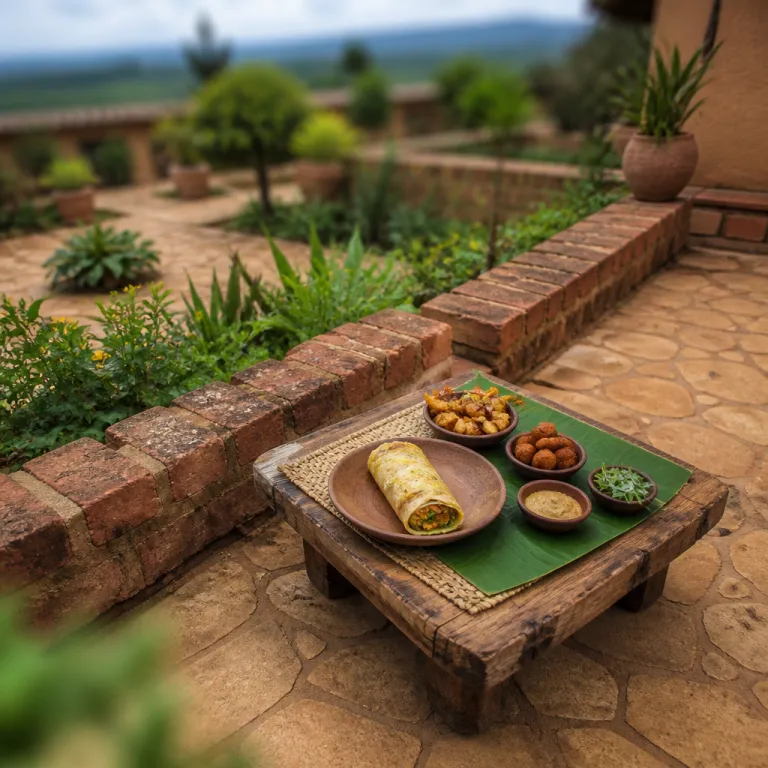
Uganda lodge gastronomy would feel incomplete without the rolex, that rolled chapati with egg that fuels the country’s streets. At the luxury level, chefs are now reimagining this icon, turning it into a refined first course while keeping the spirit of a snack eaten standing at a roadside stall in Uganda. The key is respect, not reinvention for its own sake, and the best lodges understand that their guests want the story of the rolex as much as the flavour.
On one tasting menu near Bwindi Impenetrable Forest, a chef serves a miniature rolex cut into precise cylinders, filled with free-range egg, grilled vegetables from the lodge garden and a smear of chilli sauce, then pairs it with a small glass of passion fruit juice instead of the usual soft drinks. Another safari lodge on the way to Murchison Falls offers a breakfast station where a cook prepares rolexes to order, explaining to each diner at the counter how the dish became a national habit for people rushing to work or to class. In both singular and plural forms, these rolex interpretations show how Ugandan dishes can move from street to white tablecloth without losing their Ugandan identity.
This same logic applies to staples like matoke rice, beans and groundnut sauce, which appear in multi-course menus that sit comfortably beside European classics. Lodges that take their culinary programme seriously now plate matoke in banana leaves, drizzle it with clarified butter and serve it alongside grilled tilapia from a nearby lake, turning a daily staple into something worthy of a wine pairing. For travelers curious about how far this can go, the detailed guide to slow safaris and food-focused lodges on myugandastay.com offers a useful benchmark for comparing properties across different wildlife safaris circuits.
Forest to table, coffee rituals and the primate corridor
Some of the most compelling Uganda lodge gastronomy happens where the forest presses right up to the deck. Around Bwindi and other forested corners of Uganda, chefs are working with foraged herbs, wild honey and community-sourced ingredients to build menus that echo the landscape where gorilla and golden monkey families move. Here, the idea of forest to table is not a slogan but a daily practice shaped by altitude, rainfall and the rhythms of gorilla trekking departures.
At lodges near Bwindi Impenetrable National Park, breakfast might feature honey from hives tended by local people who once relied on the forest for more extractive livelihoods. That honey then appears again at dinner in a glaze for roast chicken, or in a dessert that layers banana leaves, caramelised plantain and a light custard, showing how Ugandan cuisine can be both simple and technically assured. In these safari lodges, lodge-based gastronomy becomes a conservation tool, because every jar of honey or basket of herbs purchased from nearby communities reinforces the value of keeping the forest standing for future years.
Coffee rituals add another layer to this story. Many lodges now serve arabica from Mount Elgon or the Rwenzori foothills through in-room pour-over kits or terrace-side ceremonies, giving each guest a direct connection to the farmers behind the beans. For executives who spend their days in meetings, these quiet coffee moments before or after wildlife safaris can be as memorable as a sighting of a gorilla family or a golden monkey troop, and they underline how Uganda safari experiences increasingly extend from the trail to the cup.
Business leisure, private tables and how to choose your food focused lodge
For the business-leisure traveler, Uganda lodge gastronomy is not just about flavour, it is about how a property structures time. After three intense days of meetings in Kampala or Entebbe, many people want a short safari Uganda extension that feels restorative but still efficient, often in June or other shoulder months when rates can be more flexible. Choosing between lodges then becomes a question of which safari lodges offer private dining decks, chef’s table experiences or compact cooking classes that fit into a two-night stay.
Some lodges near Murchison Falls National Park now arrange wine-pairing dinners on secluded terraces, where a small group can talk business between courses while the distant roar of the falls national waters replaces city noise. Others in the Bwindi region schedule late-afternoon cooking demonstrations focused on Ugandan dishes such as matoke rice with groundnut sauce, allowing everyone in the class to learn techniques they can replicate at home. In both cases, Uganda lodge gastronomy becomes a softer networking tool, more relaxed than a formal meeting yet structured enough to feel purposeful.
When comparing options on a platform like myugandastay.com, look beyond headline rates and ask specific questions. Does the lodge include all accommodation meals and non-alcoholic soft drinks, or are there supplements for tasting menus and special diets for different people in your party? How closely does the kitchen work with local suppliers, and can they articulate a clear philosophy around Ugandan cuisine that goes beyond generic international buffets? As one concise reference puts it, "What is a rolex in Ugandan cuisine?" "A popular street food made of eggs and chapati." "Are Ugandan luxury lodges suitable for food enthusiasts?" "Yes, they offer unique culinary experiences." "Do these lodges accommodate dietary restrictions?" "Most lodges cater to various dietary needs."
Where Uganda stands in the regional food landscape
Uganda lodge gastronomy sits in an interesting regional context. Nairobi has a dense restaurant scene and Kigali is building one, but in Uganda the most ambitious cooking happens inside lodges scattered along the primate and wildlife safaris circuits. That means the country’s culinary story is told in dining rooms overlooking Murchison Falls, in verandas facing Bwindi Impenetrable Forest and in riverside decks where hippos grunt below.
There are no Michelin-level standalone restaurants yet, and serious diners should understand that the benchmark here is different from Paris or New York. The best safari lodges instead offer a coherent narrative that links Ugandan cuisine, local sourcing and the specific ecosystems around each property, whether that is a national park savannah or a forested gorge. Over the years, this has created a network of safari lodges and individual lodge kitchens that function as an informal culinary school for young Ugandan chefs, many of whom started as trainees from nearby villages.
For travelers, this means the most rewarding itineraries connect several lodges with distinct food personalities. One stay might focus on fish and river produce near Murchison Falls, another on forest-influenced menus near Bwindi, and a third on coffee and highland vegetables in the west, each stop adding a new layer to your understanding of Uganda lodge gastronomy. Whether you are a single person traveling solo or a group of four people sharing twin suites, planning your route around both wildlife and kitchens will give your Uganda safari a depth that goes far beyond checklists of gorilla, golden monkey and big game sightings.
FAQ
Are Uganda’s luxury lodges suitable for serious food enthusiasts ?
Yes, many of Uganda’s top lodges now treat gastronomy as a core part of the experience, with kitchen gardens, tasting menus and thoughtful presentations of Ugandan dishes alongside international options. Properties near Bwindi Impenetrable Forest and Murchison Falls National Park are particularly strong for guests who want wildlife safaris paired with ambitious cooking. When booking, ask specifically about their approach to Ugandan cuisine and whether lodge-based gastronomy is central to their identity.
Can luxury lodges in Uganda handle dietary restrictions and preferences ?
Most high-end lodges in Uganda are well versed in accommodating dietary needs, from vegetarian and vegan to gluten free and allergy-sensitive menus. Because many rely on their own gardens and flexible local sourcing, chefs can usually adjust accommodation meals with advance notice. It is wise for everyone on a booking to communicate requirements clearly at reservation stage so the safari lodge team can plan.
How do food experiences differ between regions like Bwindi and Murchison Falls ?
Lodges around Bwindi and other forested areas often lean into forest to table concepts, using wild honey, herbs and produce that reflect gorilla trekking landscapes. Around Murchison Falls National Park, menus may highlight river fish, grilled meats and open-air dining that frames views of the falls national area and the Nile. Both regions contribute distinct chapters to Uganda lodge gastronomy, so combining them in one Uganda safari offers useful contrast.
Is it worth paying higher rates for lodges with strong culinary programmes ?
For travelers who value food, paying slightly higher rates for lodges with serious culinary intent usually delivers better overall value. These properties often include more generous accommodation meals, higher quality ingredients and experiences like chef’s tables or coffee ceremonies that enrich non game drive hours. Over several days, the difference in lodge cuisine can shape how you remember the entire trip, not just the wildlife sightings.
How many days should I plan to fully enjoy lodge based food experiences ?
A minimum of two nights per lodge allows enough time to experience the range of meals, from breakfast rituals to multi-course dinners. With three or four days, you can add cooking classes, garden walks and private tastings without rushing your wildlife safaris or gorilla trekking. Business-leisure travelers extending work trips often find that a long weekend is the sweet spot for balancing meetings, safari and serious dining.