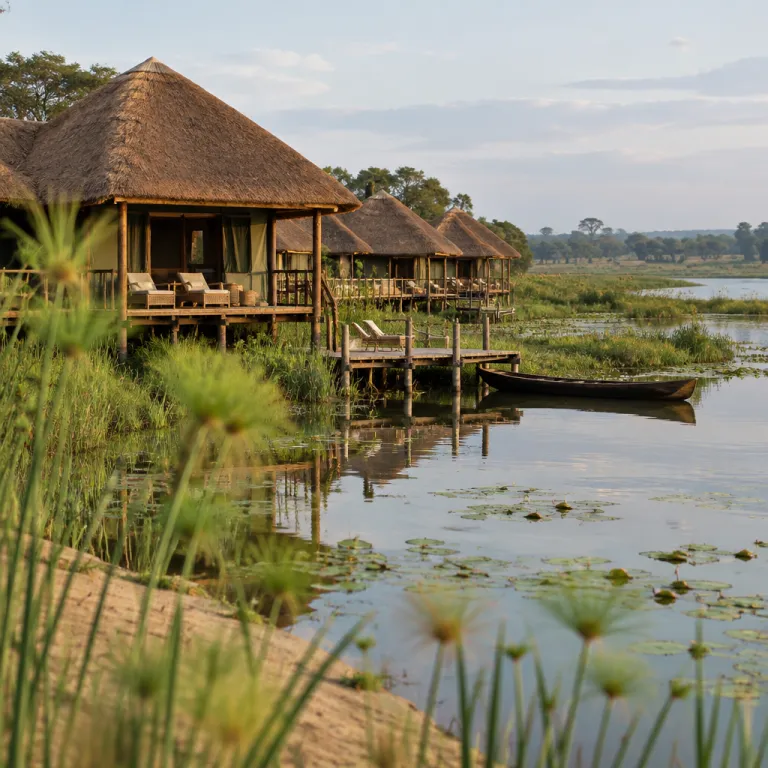
Lake Kyoga Uganda as a serene luxury nature hub
Lake Kyoga in Uganda sits at the heart of the Victoria Nile corridor, forming a tranquil wetland world that feels far from urban noise. This vast Uganda lake system stretches across central Uganda, with open water merging into papyrus swamps and floating water lilies. For luxury travellers, the wider Kyoga Lake basin offers rare quiet, gentle depth of experience, and access to some of East Africa’s most atmospheric water landscapes.
The lake itself is a classic shallow lake, with an average depth of around 3 metres, which shapes both its ecology and the style of premium stays around it. Because the water remains relatively warm and calm, fish species such as tilapia and the famous Nile perch thrive in the wider catchment area that links Lake Kyoga, Lake Victoria, and Lake Albert. Many high end lodges and premium camps now design their experiences around low impact fishing, birding, and slow travel across this interconnected lakes Uganda network.
Kyoga Lake lies between the African Great Lakes of Lake Victoria and Lake Albert, connected by the Victoria Nile and the White Nile as they flow north through Uganda. This position within the African Great Lakes system makes Lake Kyoga a strategic stop for travellers combining refined safaris on other Uganda lakes with quieter nature retreats. When you plan a stay around Lake Kyoga in Uganda, you tap into a broader lakes system that includes Lake Victoria, the open water of Lake Albert, and the great lakes of East Africa.
Nature retreats and refined stays around the Kyoga wetlands
Luxury and premium properties around the Kyoga wetlands tend to favour intimate footprints, with suites and villas set back from the lake shore to protect fragile papyrus belts. From these retreats, guests can watch the Victoria Nile slide through the wetlands, while small boats cross the shallow lake at first light. The best stays use elevated decks to frame the lake, the surrounding catchment area, and the distant islands that dot the open water.
Many travellers pair time at Kyoga Lake with gorilla trekking in western Uganda, using the lake region as a softer, slower chapter in a longer journey. If you are planning a high end gorilla and lake itinerary, it is worth exploring curated routes that link Lake Victoria, Lake Kyoga, and the forested highlands in one seamless arc. Specialist operators focusing on Uganda gorillas and refined nature retreats for luxury travellers often include Kyoga’s wetlands as a restorative pause between more intense wildlife days.
On the eastern shores near Bugondo in Serere District, small communities live from fishing and wetland agriculture, and some premium lodges now partner with them for guided cultural walks. These experiences help guests understand how native species of fish, birds, and plants support livelihoods across the wider catchment. When evaluating properties, look for those that cap guest numbers, limit motorised traffic on the water, and support monitoring of fish species in the surrounding lakes Uganda network.
Ecology, species, and what they mean for your stay
The ecology of Lake Kyoga in Uganda is defined by its shallow depth, extensive papyrus fringes, and the constant flow of the Victoria Nile. Because the lake is a shallow lake, wind can stir nutrients from the bottom, feeding plankton and supporting dense populations of fish species. This productivity attracts water birds, making the area one of the more rewarding wetland birding zones in East Africa for travellers who appreciate quiet observation from the comfort of a lodge deck.
Historically, the wider lakes system that includes Lake Victoria, Lake Kyoga, and Lake Albert has been shaped by the introduction of Nile perch, which transformed fish communities and local fishing cultures. Around Kyoga Lake, you will still find native species such as tilapia and lungfish, but the balance between native species and introduced fish species remains a live conservation issue. Responsible luxury properties now work with researchers to track fish populations, water quality, and the health of papyrus belts that stabilise the shoreline.
For travellers who care about impact, it is worth reading how lodges address plastic use, wastewater, and community partnerships before booking. A critical perspective on green claims in Uganda’s hospitality sector can be found through analyses such as an in depth look at Uganda’s green hospitality commitments by regional tourism researchers. When a property near Lake Kyoga shows clear data on its water treatment, support for local fishing cooperatives, and engagement with the catchment area, you gain confidence that your stay supports both the lake and its people.
Planning a luxury stay: locations, logistics, and lake based experiences
Reaching Lake Kyoga in Uganda usually involves a road transfer from Kampala or Jinja, following routes that trace the Victoria Nile as it leaves Lake Victoria. Travel times vary with road conditions, but many premium operators include private 4×4 transfers or light aircraft hops that shorten the journey to around four to six hours door to door. Once you arrive, the rhythm slows, and most movement happens by boat or on foot along the lake shore.
When choosing where to stay, consider whether you prefer proximity to the main Victoria Nile channel, quieter inlets, or more remote papyrus islands. Properties near Bugondo offer easier access to community experiences and fishing excursions, while more secluded retreats sit deeper within the wetlands, facing open water and floating mats of water lilies. In every case, ask how the lodge manages boat traffic, as excessive speed on the shallow lake can erode banks and disturb both fish species and bird colonies.
Typical activities around Kyoga Lake include guided birding, low impact fishing, canoe trips through papyrus channels, and sunset cruises across the lake. Some itineraries combine time on Lake Kyoga with visits to Lake Victoria or Lake Albert, creating a circuit through several Uganda lake environments within the African Great Lakes region. For travellers designing a broader East Africa journey, this allows you to experience contrasting lakes Uganda landscapes, from the vast open water of Lake Victoria to the quieter, shallower expanses of Lake Kyoga.
How Lake Kyoga fits into Uganda’s wider great lakes journeys
Lake Kyoga in Uganda occupies a central position in the African Great Lakes story, even though it is less famous than Lake Victoria or Lake Albert. The Victoria Nile flows from Lake Victoria into Kyoga Lake, then continues as the White Nile towards northern Uganda and beyond. This continuous flow links multiple lakes, wetlands, and catchment areas, creating a single, complex lakes system that shapes both ecology and travel routes.
For high end travellers, this geography opens elegant multi stop itineraries that weave together different Uganda lake experiences. You might begin with a refined stay on Lake Victoria, continue to a nature retreat on Lake Kyoga, then end with a wildlife focused lodge near Lake Albert or in the Albertine Rift. Each lake offers distinct depth of experience, from open water sailing on Lake Victoria to intimate wetland birding on the shallow lake expanses of Kyoga.
To refine your planning, consult curated hotel collections that specialise in Uganda’s most polished properties and nature retreats. A useful starting point is a magazine style guide to Uganda’s most refined hotel destinations, which places Lake Kyoga within a broader map of lakes Uganda and safari regions. By aligning your preferences with the character of each lake, you can create a journey that feels coherent, balanced, and deeply rooted in East Africa’s water landscapes.
Choosing the right property on a luxury booking platform
When you use a premium hotel booking website focused on Uganda, pay close attention to how each property around Lake Kyoga presents its relationship with the lake. Look for clear descriptions of distance to the water, views over open water or papyrus, and access to the Victoria Nile or smaller channels. Detailed maps and photographs should show whether the lodge faces sunrise, sunset, or the main lake area, which can shape your daily rhythm.
Serious platforms now highlight sustainability credentials, community partnerships, and conservation work as core filters, not afterthoughts. Around Kyoga Lake, this might include support for local fishing cooperatives, monitoring of fish species, and restoration of papyrus belts that stabilise the shallow lake shoreline. Properties that publish transparent information about their water use, waste management, and engagement with the wider catchment area usually offer more trustworthy experiences.
As you compare options, consider room count, guiding quality, and how activities connect you to the broader African Great Lakes context. Some lodges specialise in birding and wetland ecology, while others focus on combining Lake Kyoga stays with gorilla safaris or visits to Lake Victoria and Lake Albert. A well designed booking platform will help you filter by these themes, ensuring that your time on Lake Kyoga in Uganda aligns with your wider East Africa journey.
Seasonality, water levels, and what to expect on the ground
Seasonal shifts in rainfall across Uganda influence water levels on Lake Kyoga, the Victoria Nile, and connected wetlands. During wetter months, the lake area can expand as open water pushes into papyrus belts, while in drier periods, channels narrow and some shallow sections become harder to navigate. Luxury properties adapt by adjusting boat routes, timing of excursions, and the balance between water based and land based activities.
Because Lake Kyoga is a shallow lake, changes in water level can quickly affect fishing conditions and the distribution of fish species. Local guides track these patterns closely, advising guests on the best times for low impact fishing, birding, or photography along the lakes Uganda corridor. When water levels rise, you may see more floating islands of papyrus and water lilies drifting across the lake, creating striking scenes at sunrise and sunset.
In the broader African Great Lakes context, these seasonal dynamics echo patterns seen on Lake Victoria and Lake Albert, though each Uganda lake responds differently to regional climate. Travellers who understand this variability tend to appreciate the lake’s character more deeply, accepting that depth, colour, and clarity of the water will shift across the year. When booking through a premium platform, look for recent images and up to date notes on water conditions, so your expectations for Lake Kyoga in Uganda match the reality on arrival.
Key figures and environmental context for Lake Kyoga Uganda
- Lake Kyoga covers an estimated surface area of around 1 720 square kilometres, making it one of Uganda’s larger inland lakes after Lake Victoria and Lake Albert (Uganda Ministry of Water and Environment, National Water Bodies Data Set, 2020, based on national hydrological mapping).
- The average depth of Lake Kyoga is approximately 3 metres, with some channels reaching greater depth where the Victoria Nile passes through, which reinforces its classification as a shallow lake (regional limnology surveys on Uganda lake systems by the Makerere University Department of Environmental Management).
- Across the wider lakes system that includes Lake Victoria, Lake Kyoga, and Lake Albert, scientists have recorded more than 200 fish species, though the dominance of Nile perch in some basins has reduced the abundance of certain native species (East African fisheries research programmes and Nile Basin Initiative technical reports on fish communities).
- The Victoria Nile and White Nile together drain a catchment area of several hundred thousand square kilometres across East Africa, linking the African Great Lakes to downstream countries and underlining the strategic importance of Uganda’s wetlands (Nile Basin Initiative hydrological assessments and regional water resources studies).
Frequently asked questions about Lake Kyoga Uganda luxury stays
Is Lake Kyoga safe for luxury travellers to visit ?
Lake Kyoga in Uganda is generally considered safe for visitors who travel with reputable operators and stay at established lodges. Most premium properties provide guided boat transfers, life jackets, and trained staff familiar with local water conditions. As with any lake in East Africa, it is wise to follow lodge guidance on where and when to move on the water.
What is the best time of year to stay at Lake Kyoga ?
Many travellers prefer the drier months, when roads are easier and boat navigation on the shallow lake is more predictable. Birding can be excellent throughout the year, but some migratory species appear seasonally around the papyrus belts and open water. Before booking, ask your chosen lodge or booking website for recent updates on water levels and access.
Can I combine Lake Kyoga with gorilla trekking in one itinerary ?
Yes, it is entirely feasible to combine a stay on Lake Kyoga in Uganda with gorilla trekking in western Uganda. Travellers often fly or drive between the lake region and the gorilla parks, using Kyoga as a restful interlude between more demanding trekking days. Specialist operators can link Lake Victoria, Lake Kyoga, and the gorilla highlands into one coherent route.
What activities are available at luxury lodges on Lake Kyoga ?
Typical activities include guided boat trips on the Victoria Nile, birding along papyrus channels, low impact fishing focused on understanding local fish species, and cultural visits to communities such as those near Bugondo. Some lodges also offer wellness experiences, from lakeside yoga decks to spa treatments that use locally sourced ingredients. The exact mix depends on the lodge’s location within the catchment area and its access to open water or wetlands.
How does Lake Kyoga differ from Lake Victoria or Lake Albert for travellers ?
Lake Kyoga is shallower and more heavily fringed with papyrus than Lake Victoria or Lake Albert, creating a more intimate wetland atmosphere. While Lake Victoria and Lake Albert offer broader horizons of open water, Kyoga Lake excels at close up birding, quiet boat journeys, and nuanced views of the lakes system that feeds the White Nile. For many luxury travellers, this makes Lake Kyoga in Uganda an ideal complement to stays on the larger African Great Lakes.