Fort Portal town Uganda as a refined tourism city gateway
Fort Portal town Uganda sits in western Uganda as a green highland city. This elevated tourism city stands at about 1,523 meters, giving it a cool climate and clear views of the Rwenzori Mountains. In this city area, luxury travelers find a calm base that still connects easily to every major national park in the region.
The town of Fort Portal lies in Kabarole District, which forms part of western Uganda and the wider Great Lakes region of East Africa. Because Fort Portal became a formal city in 2020 under a national urbanization program, you will notice visible development in roads, hospitality projects, and cultural venues across the city center. This growth in Fort Portal infrastructure supports premium hotels that now serve guests heading to nearby national parks and crater lakes.
Fort Portal is named after Sir Gerald Portal, a British Consul General whose legacy still shapes the city’s identity. The Omukama of Toro, who resides in the Toro Palace above the town, adds a strong cultural dimension to this tourism destination. When you visit the palace hill, you see how the city, the fort history, and the surrounding crater region all connect in one sweeping panorama.
Hidden luxury bases between crater lakes and the Rwenzori mountains
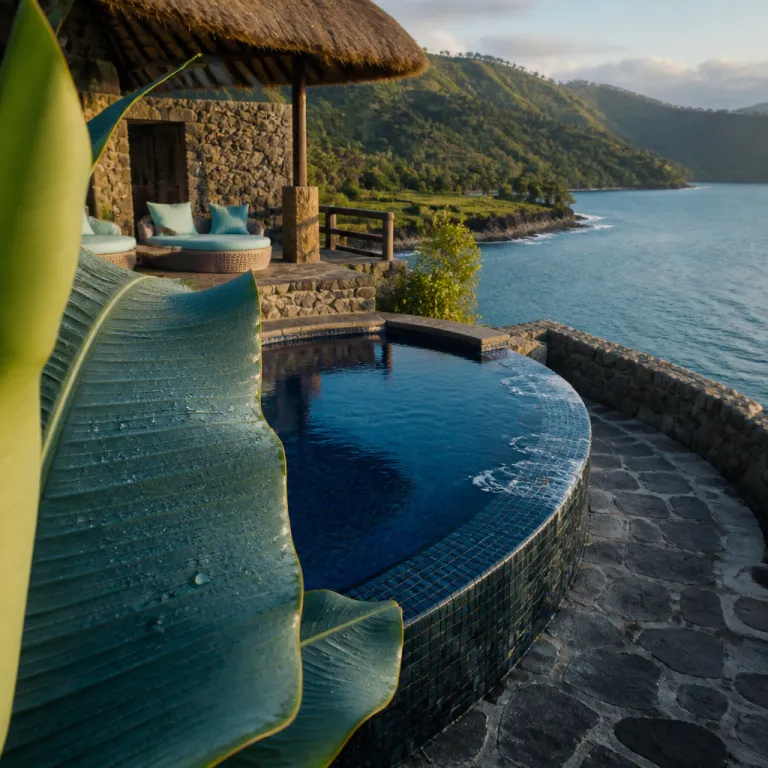
Staying in Fort Portal town Uganda allows you to sleep close to crater lakes while enjoying refined service. Many premium lodges sit on ridges above these crater lakes, offering views across Kabarole District and towards the Rwenzori Mountains. From these elevated properties, you can see how the forest patches, the city, and the lakes form a rare tourism destination in East Africa.
In this part of western Uganda, the crater region around Fort Portal includes dozens of volcanic basins filled with clear water. Some luxury hotels overlook a single crater lake, while others face chains of crater lakes that stretch towards the Rwenzori Mountains and Queen Elizabeth National Park. When you choose a room, ask for a balcony that faces both the lake and the forest, because the mix of water and bird species is what makes this Fort Portal landscape unique.
Travelers who want to compare refined stays across Uganda often pair Fort Portal with high end lodges in more remote areas. For example, you can read about refined stays in the Karamoja region to understand how a wild frontier contrasts with the softer crater lakes around Fort Portal. This kind of itinerary shows how one country can offer both rugged mountains and gentle lakes within a single luxury journey.
From Fort Portal city to Kibale forest and other national parks
Fort Portal town Uganda is widely known as the most convenient city gateway to Kibale forest. The drive from the city center to Kibale Forest National Park usually takes less than one hour, which makes it ideal for luxury travelers who prefer short transfers. Because of this proximity, many premium hotels in Fort Portal offer early breakfast for guests heading to chimpanzee tracking in the forest.
Kibale Forest National Park is often called the primate capital of East Africa, and it is the main reason many visitors choose this tourism city as a base. When you book a guided chimpanzee tracking experience, you usually meet your guide in the park offices before walking into the forest with a small group. During this walk, you may also see rare bird species, butterflies, and other wildlife that thrive in the national park ecosystem.
From Fort Portal, it is also easy to reach other national parks that define western Uganda as a leading tourism destination. Queen Elizabeth National Park lies to the south, where the savannah plains contrast sharply with the forest of Kibale and the wetlands near the crater lakes. For travelers who love water based scenery, it is worth reading about serene luxury stays on Lake Bunyonyi and then comparing those island experiences with the lakes around the city.
Cultural depth, Toro Palace, and refined food experiences in town
Luxury travel in Fort Portal town Uganda is not only about national parks and crater lakes. The city also serves as the cultural heart of the Toro Kingdom, with the Toro Palace standing above the town as a symbol of continuity. When you visit the palace, you gain insight into how the Omukama of Toro and the local community have shaped this tourism destination over generations.
Guides in Fort Portal often repeat a simple summary when guests ask what makes the city special: "Fort Portal is known for its scenic beauty, cultural heritage, and proximity to national parks." This statement captures how the city identity blends landscape, history, and wildlife into one coherent experience. When you walk from the palace down into the town, you pass local markets, schools, and new development projects that show how tourism supports daily life.
Food in Fort Portal reflects both local ingredients and international influences brought by tourism. Many premium hotels in the city serve menus that combine fresh produce from Kabarole District with refined presentations suited to luxury travelers. You can enjoy a slow lunch with views of the Rwenzori Mountains, then head into town for a more casual dinner where local food traditions remain strong.
Choosing luxury and premium hotels in a growing tourism city
When you plan a stay in Fort Portal town Uganda, the first decision is whether to sleep in the city or near a national park. Hotels in the city center offer easier access to restaurants, cultural sites, and services, while lodges near Kibale forest or the crater lakes provide more immersion in nature. Both options can reach luxury standards, so your choice depends on how you balance comfort, privacy, and daily travel time.
Because Fort Portal has recently gained full city status, you will notice ongoing development in the hospitality sector. New properties appear along the main roads leading to Kibale National Park, Queen Elizabeth National Park, and the Rwenzori Mountains, each positioning itself as a premium tourism destination. When comparing these hotels, look carefully at room size, views of lakes or forest, and how each property manages access to national parks and crater lakes.
For travelers who want to refine their selection process, it helps to study how luxury lodges operate across Uganda. A detailed guide to choosing the right high end lodge in Uganda explains what to expect in terms of service, guiding, and conservation practices. Applying those criteria in Fort Portal will help you identify which city hotels truly meet premium standards and which ones simply benefit from the town’s strategic location.
Practical guidance for planning your visit around Fort Portal
Reaching Fort Portal town Uganda from Kampala usually involves a road journey of about 296 kilometers. The drive across western Uganda takes several hours, but the scenery of rolling hills, tea plantations, and lakes makes the route part of the tourism experience. Many luxury travelers choose private transfers arranged by their hotel, which allows them to stop at viewpoints and small town markets along the way.
Once you arrive in the city, it is wise to structure your visit around specific themes. One day can focus on Kibale forest and chimpanzee tracking, another on crater lakes and bird species, and a third on cultural experiences in the town and at the Toro Palace. This approach ensures that you balance time in national parks with time in the central area, where you can enjoy food, spa treatments, and relaxed evenings.
Using local guides is essential if you want to understand how Fort Portal functions as a tourism destination within East Africa. A knowledgeable guide in Fort Portal can explain the history of Sir Gerald Portal, the role of the Omukama, and the way tourism supports development in Kabarole District. When you combine this human insight with the natural beauty of lakes, mountains, and forest, your stay in Fort Portal becomes far richer than a simple hotel booking.
Eco tourism, conservation, and the future of luxury stays in the region
Luxury travel in Fort Portal town Uganda increasingly aligns with eco tourism principles. Many high end properties around the crater lakes and near Kibale Forest National Park now invest in solar power, waste reduction, and community projects in Kabarole District. This shift reflects a wider movement across western Uganda, where tourism and conservation are seen as partners rather than competing interests.
The context around Fort Portal shows how a city can serve as a gateway to several national parks and still protect its surrounding forest and lakes. Local government, tourism boards, and cultural institutions collaborate to promote tourism while preserving heritage and supporting development in the city. For guests, this means that every visit to a national park, every guided walk in Kibale forest, and every boat trip on crater lakes can contribute directly to conservation and local livelihoods.
Looking ahead, Fort Portal is well placed to strengthen its role as a leading tourism city in East Africa. Its combination of a cool climate, views of the Rwenzori Mountains, access to Kibale forest, and proximity to Queen Elizabeth National Park gives it a rare strategic position. For travelers who value both comfort and meaning, choosing a luxury hotel in Fort Portal becomes a way to enjoy refined service while supporting a region where tourism, culture, and nature remain closely linked.
Key figures about Fort Portal and its tourism landscape
- Fort Portal has an estimated population of about 60,000 to 70,000 people in the city area, which makes it a compact urban center where visitors can cross the town quickly while still finding a full range of services (based on Uganda Bureau of Statistics and local government estimates).
- The city stands at an elevation of roughly 1,523 meters above sea level, giving Fort Portal a cooler climate than many other parts of Uganda and making it comfortable for travelers who plan active days in nearby national parks (source: Uganda Bureau of Statistics and national mapping data).
- The distance between Kampala and Fort Portal is approximately 296 kilometers by road, so travelers should plan a journey of several hours and consider private transfers or organized transport through their hotel or travel agency (source: Uganda National Roads Authority).
- Fort Portal was named after Sir Gerald Portal in the late nineteenth century, and this historical link still shapes the city identity and its role as a strategic base for British administration in the region at that time.
- The city now functions as a formal urban center for Kabarole District, supporting tourism, agriculture, and education as the three main pillars of its modern economic development.
Frequently asked questions about Fort Portal town Uganda
What is Fort Portal mainly known for among travelers ?
Fort Portal is mainly known for its scenic setting, its cultural ties to the Toro Kingdom, and its proximity to several national parks. The city serves as a practical base for visiting Kibale Forest National Park, Queen Elizabeth National Park, and the Rwenzori Mountains. Many travelers also associate the town with crater lakes and cool highland weather.
How far is Fort Portal from Kampala and how do I get there ?
The distance from Kampala to Fort Portal is about 296 kilometers by road. Most visitors travel by private vehicle, organized transfer, or scheduled bus services that run between the capital and the tourism city. Because the journey crosses hilly terrain in western Uganda, it is wise to allow a full day for travel and to arrive before dark.
Which national parks can I access easily from Fort Portal ?
From Fort Portal, you can access Kibale Forest National Park in less than an hour, which makes it ideal for chimpanzee tracking. Queen Elizabeth National Park lies further south and offers savannah wildlife viewing, while the Rwenzori Mountains National Park provides trekking opportunities in a high altitude environment. This cluster of national parks is one reason the city is considered a key tourism destination in East Africa.
What are the main attractions inside and around the town itself ?
Inside the town, the main attractions include the Toro Palace, local markets, and viewpoints that overlook the city and surrounding crater lakes. Around Fort Portal, visitors often explore tea plantations, small villages in Kabarole District, and walking trails that link different crater basins. These experiences complement wildlife safaris and give a fuller picture of daily life in the region.
Is Fort Portal a good base for luxury and premium hotel stays ?
Fort Portal has become an excellent base for luxury and premium hotel stays because of its growing hospitality infrastructure and strategic location. Travelers can choose between high end properties in the city center, lakeside lodges near crater lakes, and forest edge accommodations close to Kibale forest. This variety allows guests to match their preferred level of seclusion, access to national parks, and cultural immersion while still enjoying refined service.