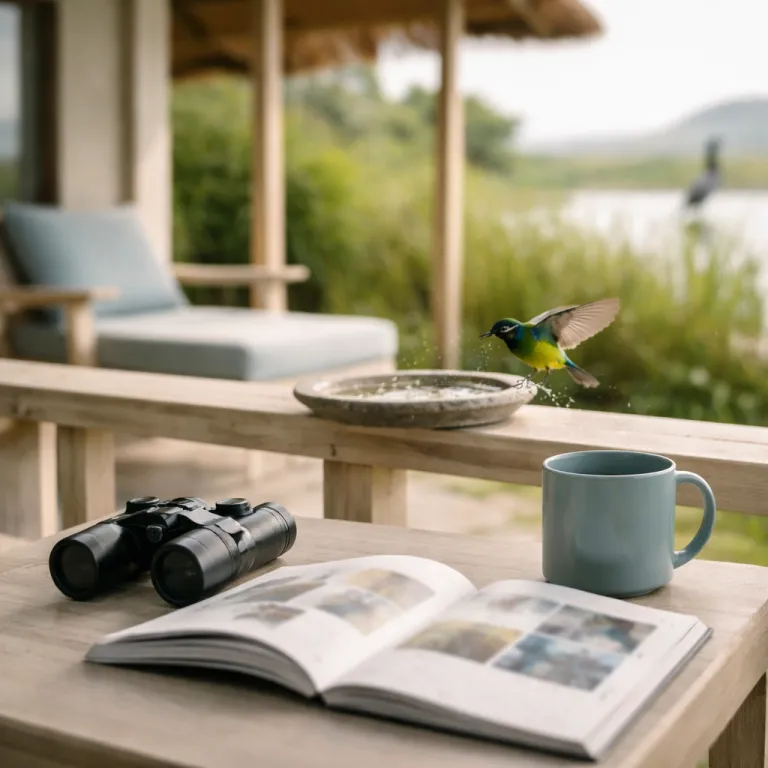
Uganda birding luxury as the quietest high-end safari
Uganda is marketed through gorilla permits and primate headlines, yet luxury birding in Uganda is where the country’s real exclusivity lives. On a good birding day you might share a forest trail with two other guests, while the same national park will see dozens of trekkers queuing politely for their gorilla family allocation. For a solo explorer who values silence, the soft click of a camera shutter and the distant call of a great blue turaco feel more indulgent than any plunge pool.
This is a country holding more than 1,050 recorded bird species, which means roughly ten percent of the world’s bird species compressed into a sliver of East Africa. That density turns every transfer between one national park and the next into a rolling bird-watching session, where roadside papyrus hides malachite kingfishers and the telephone wires carry black-and-white swallows. Luxury here is not about marble but about a specialist bird guide who will stop the vehicle for a green-breasted pitta you barely glimpsed from the corner of your eye, a figure echoed in national checklists used by operators such as Journeys Uganda and regional compilations by the African Bird Club.
Uganda birding is also a contrarian way to experience African safari culture, because it stretches your stay from a rushed three days to a patient ten or fourteen days. Birding tours with operators such as Bird Uganda Safaris, Whispers Safaris Uganda and Journeys Uganda are structured so that every day adds new habitats, from lake-edge wetlands to high Albertine Rift ridges. A serious birding tour will often include gorilla trekking as an optional chapter, but the narrative arc is written around birds rather than primates, with Uganda Wildlife Authority briefings used to weave primate permits into longer, bird-led itineraries.
Consider the classic route that many luxury birding tours quietly favour, which begins with a lodge day near Entebbe and Mabamba Swamp. The next days move through Lake Mburo National Park, Bwindi Impenetrable National Park, Queen Elizabeth National Park and Kibale Forest National Park before looping back through Semuliki and the Murchison Falls area. Each park adds its own signature bird species, and the Uganda birding luxury experience comes from stitching these ecosystems together with time, not from ticking them off in a rush, so that transfers become part of the bird list rather than dead space between sightings.
For the solo traveler, that slower pace changes how you choose and book a safari lodge in Uganda. You are not looking for a quick hit of Big Five drama but for a property whose guides can identify forest birds by call and whose kitchen understands that a 5 am breakfast is non-negotiable. When you browse myugandastay.com, focus less on the thread count and more on whether the lodge team talks about birding in Uganda in the same breath as game drives and spa treatments, and whether they mention specific species or just generic “birdlife.”
From shoebills to Albertine Rift endemics: where birding lodges earn their stars
The most persuasive argument for Uganda birding luxury is a single bird standing in a swamp, the shoebill of Mabamba on Lake Victoria. This prehistoric-looking bird species, with its massive bill and stillness, turns a half-day boat tour into a pilgrimage that even non-birders remember for years. Serious birding tours treat Mabamba not as a quick add-on but as a dedicated bird-watching session with the right boat, the right guide and the right light, often timing departures to coincide with calm water and soft morning sun.
From there the narrative shifts west, into the forests and ridges of the Albertine Rift where Uganda’s rarest birds hide. Bwindi Impenetrable National Park alone holds more than 350 bird species, including 23 Albertine Rift endemics that never cross into other parts of Africa, a figure repeated in park checklists used by specialist guides. A lodge that claims birding credentials here must be able to talk about African green broadbill, Rwenzori turaco and green-breasted pitta with the same fluency as it talks about gorilla tracking permits, and should know which trails offer the best chances at each.
Properties such as Bwindi Lodge and Kyambura Gorge Lodge have built reputations on exactly this kind of habitat-level expertise, pairing high comfort with guides who live for the forest. At Bwindi’s forest edge, the Uganda birding luxury experience is waking to the call of a great blue turaco, then stepping straight from your room into a trail where black-and-white colobus leap above you. Our in-depth look at Bwindi’s gorilla tracking lodges shows how the best properties design their decks, paths and hideaways to keep you inside the forest soundscape all day long, not just during scheduled activities, with one guide noting that “the birds don’t keep office hours, so neither can we.”
Queen Elizabeth National Park plays a different role in the birding tour puzzle, because its mosaic of crater lakes, open savanna and the Kazinga Channel supports both classic safari and serious birding. Here you might spend the morning scanning for lions and elephants, then shift to a boat safari in the afternoon where birds dominate your lens. A well-run safari lodge in the Queen Elizabeth sector will brief you on both mammals and birds, and will know exactly which channel bank holds the highest density of kingfishers and bee-eaters on any given day, adjusting routes as water levels and seasonal movements change.
Further north, the Murchison Falls region adds another layer to birding in Uganda, with the Nile corridor attracting different species again. On a good lodge day near the river you can watch African fish eagles, goliath herons and flocks of smaller birds commuting between riverine forest and open grassland. The best safari lodge teams here understand that a guest might want to skip the standard waterfall cruise and instead take a slower bird-focused boat tour that hugs the reed beds where shy species feed, a style of guiding that many operators now describe as “quiet-water birding.”
What a true birding lodge does differently from a standard safari stay
Not every property in Uganda that mentions birding on its website is ready for the Uganda birding luxury traveler. A genuine birding lodge is built around the birds’ schedule, which means breakfast laid out before dawn, flexible packed meals and guides who will happily stay out all day if the forest is active. If a lodge cannot arrange an early boat on the lake or a pre-sunrise walk in the forest, it is not yet playing in the serious birding league, no matter how many bird photographs appear in its brochure.
Look closely at how a property structures its tours and daily rhythm, because that is where priorities reveal themselves. Birding tours require small groups, long quiet pauses and the freedom to abandon a plan when a rare green-breasted pitta calls from deep in the undergrowth. A lodge that insists on rigid three-hour game drives at fixed times is designed for mainstream safari, not for the kind of birding tour where guests will happily trade a lion sighting for an extra hour with a mixed-species flock, a trade-off many specialist guides say their keenest clients make without hesitation.
Photography adds another filter, and it is here that Uganda birding luxury can either shine or disappoint. Some safari lodge teams offer box-ticking “photo walks” that never leave the main track, while others bring in specialist leaders and structure multi-day workshops around light, angles and specific bird species. When you evaluate a property, ask whether they provide tripods, beanbags, charging stations in vehicles and guides who understand how to position a boat or vehicle for both birds and background, because these details often separate a casual photo stop from a serious bird photography session.
Hybrid itineraries that combine three days of focused birding with two days of gorilla tracking are increasingly popular among solo explorers who want depth without sacrificing headline experiences. In practice this might mean starting with birding in Uganda at Lake Mburo National Park and its acacia-dotted lake shores, then moving to Kibale Forest for chimpanzees and forest birds before ending with gorillas in Bwindi Impenetrable. Our guide to the new gorilla permit booking rules explains how to secure those primate days while still leaving room for flexible birding tours around them, using Uganda Wildlife Authority allocation windows to protect early-morning birding time.
Behind the scenes, the best lodges work with specialist operators such as Bird Uganda Safaris, Whispers Safaris Uganda and Journeys Uganda to align guiding standards with high-end hospitality. These partners bring field guides, scopes, binoculars and the kind of local knowledge that turns a standard day into a sequence of carefully targeted stops. When asked about seasonality, they will tell you without hesitation that “June–August & December–February (dry seasons); November–April for peak birding,” a pattern echoed by Uganda Wildlife Authority briefings and regional birding reports that link dry months to easier access and the longer November–April window to migrants and breeding displays.
Designing a slow, bird led itinerary across Uganda’s parks and lakes
For a solo traveler planning Uganda birding luxury online, the temptation is to cram every national park into a single loop. Resist that urge and instead choose fewer parks, more days and lodges that sit inside or right on the edge of key habitats. A bird-led itinerary across Uganda will always feel richer when you stay put long enough for the forest to relax around you, and when your guide can learn your target list rather than racing between check-in times.
A classic fourteen days route might begin with a night near Entebbe, then a half day at Mabamba Swamp before driving to Lake Mburo National Park for two nights of walking safari and bird watching around the lake. From there you continue to Bwindi Impenetrable National Park for three or four days, splitting time between gorilla tracking and long forest birding walks that target Albertine Rift endemics. The next legs carry you to Queen Elizabeth National Park for its lakes and channels, then to Kibale Forest and finally to Semuliki or the Murchison Falls region before returning to Kampala, with most road transfers falling in the five to seven hour range depending on conditions.
Within that framework, Uganda birding luxury is expressed through choices about where you sleep and how you move. Pick a safari lodge on Lake Mburo that offers canoe tours at first light, because that is when the lake birds are most active and the water is glass calm. In Kibale Forest, choose a property that can arrange both standard chimpanzee tracking and quieter birding tours into Bigodi Swamp, where the mix of forest and wetland attracts a different set of birds, and where local community guides often know individual kingfishers by their favourite perches.
Throughout the journey, use resources such as the insider’s guide to Uganda’s luxury hotels to cross-reference lodge marketing with on-the-ground birding reality. Pay attention to whether a property mentions specific bird species, talks about lodge day activities beyond game drives and references guides by name. When a lodge proudly notes that its team has worked with field experts like Nik Borrow or hosted specialist birding tour groups, that is usually a reliable signal, especially when combined with practical details such as early breakfasts and on-site bird lists.
Uganda sits at the intersection of East Africa’s savanna systems and the forests of Central Africa, which is why its birds feel so diverse in such a compact area. On a single day you might watch white and black casqued hornbills in the morning, then shift to open plains where larks and pipits dominate the soundscape. The Uganda birding luxury mindset is to let those transitions dictate your pace, staying long enough in each park and lake landscape that you stop counting species and start recognising individual birds, from the way a particular sunbird favours one flowering tree to the daily commute of weaver flocks across a bay.
Key figures that define Uganda’s birding and luxury lodge potential
- Uganda hosts more than 1,050 recorded bird species, representing around ten percent of the world’s bird species according to compilations by the African Bird Club and national checklists used by Journeys Uganda, which makes the country one of the most concentrated birding destinations on the continent.
- Specialist operators report growing demand for luxury birding tours that run for 14 days or more, reflecting a shift from short big game safaris toward longer, habitat-focused itineraries that justify higher-end lodge investments and private guiding.
- Dry season windows from June to August and December to February offer the most comfortable conditions for general safari travel, while the November to April period is considered peak birding because of migratory movements and breeding activity noted in regional bird reports.
- Key parks on a typical Uganda birding luxury circuit — Lake Mburo, Bwindi Impenetrable, Queen Elizabeth, Kibale Forest and Semuliki — together cover thousands of square kilometres, yet can be linked by road in a single extended loop that keeps transfer times manageable for solo travelers and small groups.
- Conservation-focused tour operators such as Bird Uganda Safaris, Whispers Safaris Uganda and Journeys Uganda structure their birding tours to channel high-value guests into lodges that support local guides and community projects, increasing the economic value of each bird-focused day in the field.